





Spotlights
Anesthesia Technician, Anesthesia Technologist, Certified Anesthesia Technician (Cer.A.T.), Certified Anesthesia Technologist (Cer.A.T.T.), Anesthesia Tech, Anesthesia Equipment Technician, Anesthesia Support Technician, Anesthesia Assistant, Operating Room Anesthesia Technician, Anesthesia Care Team Technologist
Before a surgery begins, a patient lies on a gurney under bright lights and takes a deep breath, trusting that everything around them has been checked and double-checked. A lot of that trust rests on people the patient may never remember meeting. Long before the first incision, an Anesthesia Technician or Technologist has already made sure the anesthesia machine works, the airway equipment is ready, the monitors are connected, the supplies are stocked, and a backup plan is within arm's reach. They are the behind-the-scenes experts who help keep patients safe while they sleep, and who let anesthesia providers focus fully on the person in front of them.
Anesthesia Technicians and Technologists are members of the anesthesia care team. They do not give anesthesia or make decisions about a patient's care. Instead, they support the physician anesthesiologists, certified registered nurse anesthetists (CRNAs), and anesthesiologist assistants who do. A technician or technologist sets up and checks anesthesia machines and monitors, prepares airway tools and intravenous supplies, restocks carts and medication trays according to hospital policy, and cleans and reprocesses equipment between cases. During procedures they stay close by to hand off supplies, troubleshoot equipment, help with emergencies, and respond when the anesthesia provider asks for help. They also work in many places beyond the operating room, including labor and delivery units, intensive care units, endoscopy suites, and imaging areas where patients need sedation.
To do this work, Anesthesia Technicians and Technologists need a strong grasp of anatomy, physiology, infection control, and how anesthesia equipment works. They use machines that deliver oxygen and anesthetic gases, ventilators, monitors that track heart rhythm, blood pressure, oxygen, and breathing, video scopes that help place breathing tubes, and ultrasound machines that guide nerve blocks. Their work matters because anesthesia is one of the most safety-critical parts of healthcare, and a well-prepared room can make the difference between a smooth day and a dangerous delay. If you like organization, technology, teamwork, and quietly being the person everyone relies on, this career could be a great fit.
- Knowing that your careful preparation helps keep patients safe during some of the most vulnerable moments of their lives
- Being a trusted member of a fast-moving surgical team, where your skills are noticed and needed every day
- Working with advanced medical technology, from anesthesia machines and monitors to ultrasound and video airway tools
- Having clear ways to keep growing, through certification, specialty training, leadership roles, or further education toward other anesthesia careers
Working Schedule
Anesthesia Technicians and Technologists usually work full-time in hospitals and surgery centers, and the schedule depends on the type of facility. In outpatient surgery centers, shifts often follow the surgery schedule, with predictable weekday hours. In hospitals, especially those with trauma centers, labor and delivery units, and emergency surgeries, anesthesia support is needed day and night, so technicians and technologists may work early mornings, evenings, nights, weekends, and holidays, and may take call to come in for emergencies. Some work ten- or twelve-hour shifts. Others work as travelers or contract staff who move between facilities for temporary assignments. Much of the day is spent on your feet, moving between operating rooms, supply areas, and equipment rooms, and the pace can change quickly when an emergency case arrives. Duties and expectations vary from one hospital to another, since each facility sets its own rules about what technicians and technologists may do under the supervision of anesthesia providers.
Typical Duties
- Setting up and testing anesthesia machines, ventilators, and monitors before each day and each case, following the manufacturer and hospital checklists
- Preparing airway equipment such as laryngoscopes, video scopes, breathing tubes, masks, and suction, and making sure backup options are ready
- Stocking anesthesia carts, trays, and rooms with IV supplies, tubing, fluids, and other items, and rechecking them between cases
- Preparing supplies and medication setups under the direction of anesthesia providers and following hospital pharmacy and safety policies
- Connecting and checking monitors for heart rhythm, blood pressure, oxygen level, and breathing, and alerting the anesthesia provider to any alarms or problems
- Assisting anesthesia providers with patient positioning, IV starts or lines, and placement of breathing tubes
- Setting up specialty equipment such as ultrasound machines for nerve blocks, blood warmers, rapid infusion systems, and cell salvage machines
- Responding to emergencies, such as a difficult airway or a cardiac arrest, by bringing equipment and helping the team
- Cleaning, disinfecting, and reprocessing reusable equipment, and following infection control rules
- Ordering supplies and tracking inventory so that nothing runs out
- Checking gas supplies and looking for leaks or equipment problems that could be unsafe
- Documenting equipment checks and supply use and helping to keep the anesthesia work area organized and safe
Additional Responsibilities
- Performing basic maintenance on anesthesia equipment and coordinating service or repairs with biomedical engineering
- Maintaining the readiness of emergency supplies, such as the difficult airway cart and the malignant hyperthermia cart
- Transporting patients and equipment between the operating room, recovery area, and other units
- Helping to train new technicians, students, and other staff
- Assisting with scheduling and coordinating between the operating room, surgeons, and other departments
- Taking part in quality and safety projects and equipment evaluations
- Learning new procedures and equipment, from cardiac surgery to organ transplant cases
- Completing continuing education to keep credentials current
An Anesthesia Technician or Technologist often arrives early, checks the day's surgery schedule, and gets a sense of which operating rooms and procedures will need the most support. The first task is to make sure each room is ready. They run through the machine checks, confirm that the oxygen and gas supplies are working, test the ventilator and suction, check the monitors and alarms, and stock the airway equipment and IV supplies. If a case needs special equipment, such as a nerve block ultrasound or a warming device for a premature infant, they set that up too. They keep notes about what they find and fix, because small problems left alone can turn into big ones.
Once the first patient rolls in, the technician or technologist moves from preparing to supporting. They help connect monitors, hand over tools, and keep a close eye on supplies while the anesthesia provider talks with the patient and starts care. During the case, they might step out to get an extra item, call for blood products, troubleshoot a monitor, or help another room. They are always ready to step in if the anesthesia provider needs a different size of breathing tube or an emergency drug set-up. If something goes wrong, such as a difficult airway or a drop in blood pressure, they bring the right cart and work quickly with the team.
Between cases, they clean up, restock, and reset the room for the next patient. Midday may include moving to a different area, such as labor and delivery for an urgent cesarean birth or the endoscopy suite for sedation cases. In the afternoon, they inventory supplies, check that emergency carts are complete, send equipment for cleaning and reprocessing, and talk with colleagues about tomorrow's schedule. At the end of the day, they hand off notes to the evening or on-call team and make sure the area is ready for the next shift.
Soft Skills
- Calm, clear thinking under pressure, especially during emergencies
- Strong communication with anesthesiologists, nurses, surgeons, and patients
- Teamwork and a willingness to help wherever you are needed
- Attention to detail, since checklists and equipment checks protect patients
- Organization and time management in a fast-moving schedule with many tasks at once
- Dependability and punctuality, because an entire surgical team can be delayed if a room is not ready
- Problem solving when equipment does not work as expected
- Active listening and the ability to follow directions precisely
- Emotional maturity and professionalism when patients and families are anxious
- Respect for patient privacy and dignity
- Adaptability to changing schedules, cases, and priorities
- Humility and a willingness to ask questions, learn from feedback, and admit when you need help
Technical Skills
- Knowledge of anatomy, physiology, and basic pharmacology as they relate to anesthesia
- Understanding of how anesthesia machines, ventilators, and gas delivery systems work and how to troubleshoot them
- Use and care of patient monitors, including ECG, pulse oximetry, blood pressure, and capnography
- Familiarity with airway devices and techniques, including video laryngoscopes and difficult airway equipment
- Knowledge of sterile technique, infection control, and cleaning and reprocessing of equipment
- Skills with IV supplies, fluids, blood warmers, and rapid infusion devices
- Basic life support and advanced cardiac life support skills
- Equipment safety, including medical gas safety and electrical safety
- Inventory and supply management, including electronic ordering systems
- Documentation and use of hospital information systems and electronic health records
- Anesthesia Technician: Provides entry-level support by preparing rooms, stocking supplies, and assisting the anesthesia team under supervision. The Cer.A.T. credential for technicians still exists for those who hold it, though ASATT no longer gives the technician exam
- Anesthesia Technologist: Holds the Cer.A.T.T. credential, has formal education or extensive experience, and takes on more advanced support, equipment, and training duties
- Operating Room Anesthesia Tech: Supports general surgery, orthopedic, and other cases in the main operating suites
- Obstetric Anesthesia Tech: Works in labor and delivery, preparing for epidurals, spinal anesthesia, and urgent cesarean births
- Cardiac and Transplant Anesthesia Tech: Supports complex surgeries with advanced monitors, bypass equipment, and special infusion systems
- Pediatric Anesthesia Tech: Prepares specialized equipment sized for babies and children and helps create a calm, safe environment
- Regional Anesthesia and Pain Tech: Assists with ultrasound-guided nerve blocks and pain procedures
- Ambulatory and Procedural Sedation Tech: Supports surgery centers, endoscopy, imaging, and other areas outside the main operating room
- Community and university hospitals
- Large academic medical centers and teaching hospitals
- Children's hospitals
- Trauma centers
- Ambulatory surgery centers
- Cancer centers
- Veterans Affairs hospitals and military medical facilities
- Women's health and birthing centers
- Endoscopy and procedural sedation suites
- Dental and oral surgery practices that provide sedation
- Staffing agencies that place travel and contract technicians
- Medical device companies and educational programs, which hire experienced technologists as trainers and clinical specialists
Working as an Anesthesia Technician or Technologist means being responsible for details that most people will never see. You may work early mornings, long shifts, nights, weekends, holidays, and on-call hours, especially in hospitals that handle emergencies and births at all hours. You will spend most of the day standing, walking, pushing heavy equipment, lifting boxes and supplies, and sometimes helping to move or position patients. Many technologists also wear scrubs, masks, and protective gear for hours at a time in a cold operating room, and they must follow strict sterile and infection control practices.
The job can also be emotionally demanding. You will work with patients who are frightened, in pain, or very ill, and you will be in the room when things do not go as planned. You may be exposed to blood, body fluids, or infectious diseases, so careful safety habits matter every day. Staying professional and calm while an emergency unfolds is a skill that takes practice, and it is common to carry the emotional weight of a difficult case home with you. Strong teamwork, supportive colleagues, and healthy ways to unwind can make a big difference.
It also helps to be honest about the career path. Anesthesia technology is a support role, so it does not include giving anesthesia, prescribing medicine, or making independent patient care decisions. Schooling is shorter than for anesthesiologist assistants, nurse anesthetists, or anesthesiologists, which can be a plus, but it also means pay, responsibility, and scope are different, and moving up to those roles requires much more education. There are not many accredited programs in the country, so you may need to move or study online and travel for clinical rotations. Requirements vary by state and by hospital, and some employers still hire people without formal training, so it helps to ask early what each employer expects.
- Growing interest in formal education and national certification, with colleges adding accredited anesthesia technology programs
- More pathways to certification, including programs for current technicians who want to advance to the technologist level and a Practical Experience Pathway for experienced technicians
- Greater use of video laryngoscopes, ultrasound-guided nerve blocks, and advanced monitors that need skilled setup and support
- Growth of ambulatory surgery centers, where efficient turnover of rooms and strong technician support are valued
- Increased attention to infection control, equipment reprocessing, and patient safety checklists
- Electronic systems that track supplies, equipment, and anesthesia records
- Expanding use of enhanced recovery programs and regional anesthesia, which can reduce pain and the need for some medicines
- Growing focus on the anesthesia care team, with technologists recognized as valuable members who support safety and efficiency
- Workforce shortages in many areas, which increase demand for trained technicians and technologists
- More attention to sustainability in anesthesia, including reducing waste and the use of certain gases
Many Anesthesia Technicians and Technologists were curious kids who liked science, the human body, and how machines work. They might have watched medical dramas, loved anatomy books, or been fascinated by hospitals after a visit or a family member's surgery. They were often the ones who liked taking things apart, organizing their rooms or supplies, or keeping their team's gear in order. Others liked building models, playing strategy games, or tinkering with electronics, and they enjoyed doing things the right way.
They also tended to be helpful, steady kids who stayed calm when others were upset. Some looked after younger siblings or relatives, volunteered, or took first aid classes, and were not bothered by things like blood or needles. Many discovered the field through a health science class, a hospital job shadow, a family member in healthcare, or a first job in the hospital, such as transport or sterile processing, and found that they loved working behind the scenes to help people stay safe.
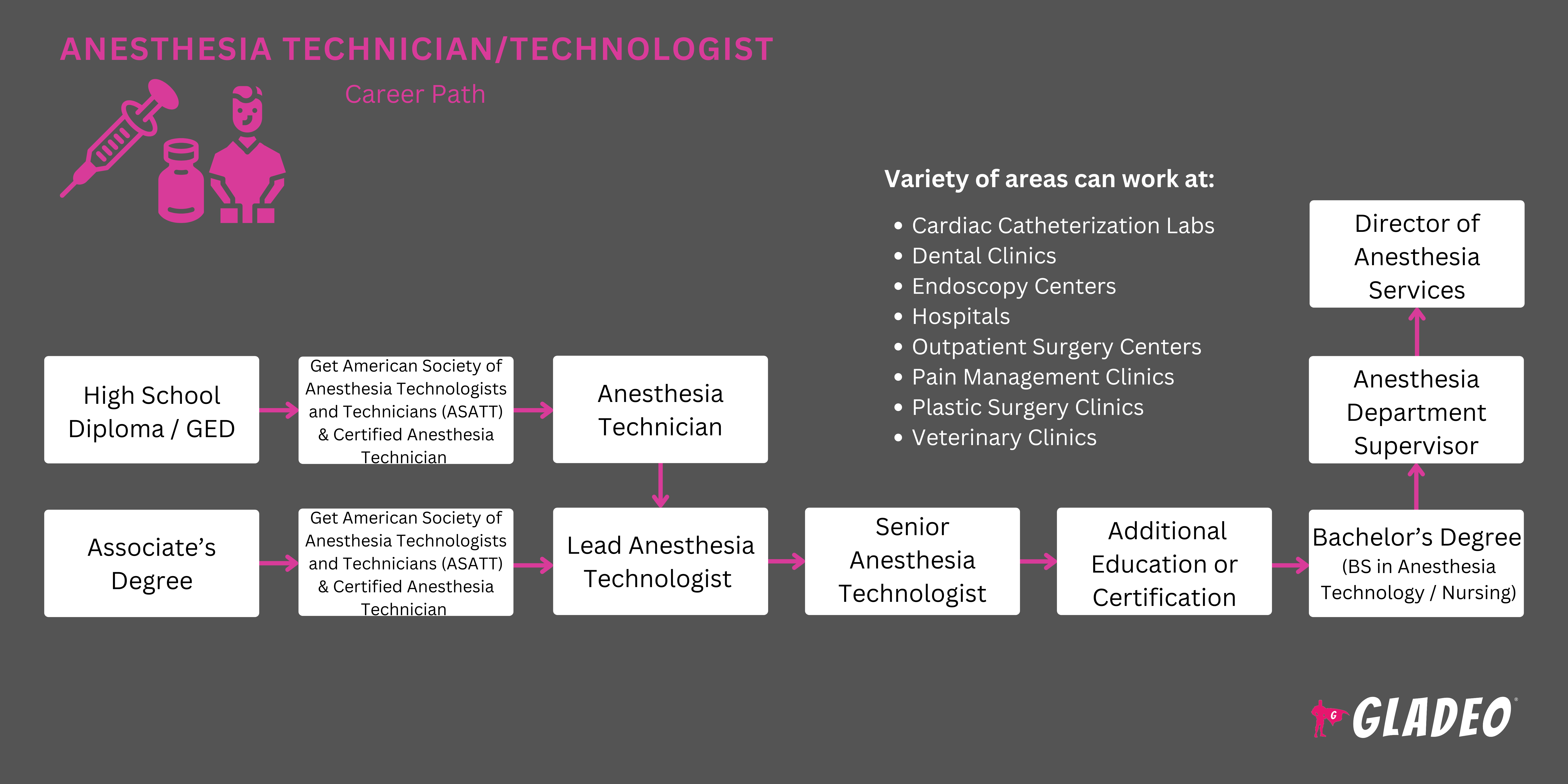
There is more than one way into this career, and requirements vary by state and by employer. Some hospitals hire people with a high school diploma and train them on the job, especially for entry-level technician roles, though many prefer candidates with some healthcare experience or education. The most direct route to national certification is to complete a program accredited by the Commission on Accreditation of Allied Health Education Programs (CAAHEP), which accredits anesthesia technology programs on the recommendation of the Committee on Accreditation for Anesthesia Technology Education (CoA-ATE). Many programs award an associate degree, and some may be offered as certificates or other formats, so it is important to check what a particular school provides. Students who finish an accredited program can apply to take the national certification exam given by the American Society of Anesthesia Technologists and Technicians (ASATT).
ASATT recognizes two credentials, the Certified Anesthesia Technician (Cer.A.T.) and the Certified Anesthesia Technologist (Cer.A.T.T.). ASATT no longer gives the technician exam, but the Cer.A.T. credential is still honored for people who already hold it, and those technicians can move up to the technologist level through an advancement program. Today, the Cer.A.T.T. is the main credential for new candidates. People qualify for the exam by completing an accredited program, by completing the advancement program if they already hold the Cer.A.T., or through the Practical Experience Pathway, which is designed for experienced technicians who never earned a credential and who meet requirements for years worked in anesthesia, anesthesia-specific continuing education, and current life support training. Candidates must hold current Advanced Cardiac Life Support (ACLS) certification, and the exam is taken on a computer at a testing center. Certification is renewed every two years through continuing education, and the number of required credits differs for technicians and technologists.
Students can take courses in relevant subjects such as:
- Human Anatomy and Physiology
- Medical Terminology
- Introduction to Anesthesia Technology
- Anesthesia Equipment and Technology
- Pharmacology for Anesthesia Technicians
- Infection Control and Sterile Technique
- Airway Management and Respiratory Care
- Patient Monitoring and Hemodynamics
- Basic and Advanced Life Support
- Clinical Practice in the Operating Room
Hands-on clinical training is a major part of any accredited program. Students rotate through operating rooms and other anesthesia settings, learning to set up and troubleshoot equipment, prepare rooms, and work with anesthesia teams. These experiences are valuable for your resume and your network, and many students are offered jobs at the facilities where they trained.
It is also helpful to understand how this job differs from other anesthesia careers. Anesthesiologists are physicians who complete medical school and residency. Certified registered nurse anesthetists (CRNAs) are advanced practice nurses who complete a nursing degree, work in critical care, and then finish a doctoral-level nurse anesthesia program (a DNP or DNAP). Anesthesiologist assistants complete a master's degree after a premedical bachelor's degree and work under the direction of an anesthesiologist in states that allow it. Anesthesia technicians and technologists are different: they support the team and do not administer anesthesia. If you someday want to take on that role, a technician or technologist job can be a great way to learn the field while you decide.
- Take biology, anatomy and physiology, chemistry, algebra, and English in high school, and aim for strong grades, since accredited anesthesia technology programs can be small and selective
- Earn your CPR and basic life support certification and keep it current
- Volunteer or work at a hospital, surgery center, or clinic to get comfortable in healthcare settings and to learn how the departments fit together
- Ask a hospital about a job shadow with an anesthesia technician, technologist, or anesthesia team, or arrange an informational interview
- Take a health science or medical terminology course, or join a HOSA chapter to learn about healthcare careers
- Look into entry-level hospital jobs, such as patient transport, sterile processing, or surgical services support, that may lead to anesthesia support roles
- Research the accredited anesthesia technology programs and check admission requirements, prerequisites, cost, and application deadlines
- Ask whether your state allows you to take college courses toward a degree while you are still in high school
- Follow ASATT and read about the field to learn the language and see what employers expect
- Practice being organized and reliable, since checklists, punctuality, and teamwork are essential in this career
- Find out what your local hospitals look for in anesthesia technician candidates by reading job postings
- Think about your long-term goals. If you may want to become an anesthesiologist assistant, nurse anesthetist, or physician someday, learn the prerequisites early and choose courses that keep your options open
- Accreditation by CAAHEP through CoA-ATE, which is the most direct route to eligibility for the Cer.A.T.T. exam
- Clear information about graduate pass rates on the national certification exam and job placement
- Strong clinical partnerships with hospitals and surgery centers where you can practice in real operating rooms
- A variety of clinical experiences, such as general surgery, obstetrics, pediatrics, and ambulatory settings
- Experienced instructors who work or have worked in anesthesia and are patient teachers
- Hands-on labs with anesthesia machines, monitors, airway tools, and ultrasound equipment
- Preparation for ACLS and other required life support certifications
- A degree that transfers to a bachelor's program if you may want to continue your education
- Straightforward information about program length, cost, and any required travel or relocation for clinical sites
- Support with certification exam preparation, resumes, and interview practice
- Flexible options, such as online coursework with local clinical rotations, if available
- Honest communication about what the job involves, including physical demands, shift work, and emergencies
- Finish an accredited program and earn the Cer.A.T.T. as soon as you are eligible, since having your certification neatly documented makes you stand out
- Keep your ACLS, basic life support, and other certifications current, and have copies ready for employers to verify
- Use your clinical rotations to build relationships. Arrive early, ask thoughtful questions, and show that you are dependable, because many hospitals hire from the sites where students train
- Present yourself as a professional and steady team member. This job calls for emotional maturity and the ability to calm others, so show that during interviews
- Search hospital career pages, surgery center websites, and job boards for titles such as Anesthesia Technician, Anesthesia Technologist, and Anesthesia Tech, and look at all places where anesthesia care is provided
- If you have time before certification, volunteer or work in a hospital so you are familiar with the facility, its staff, and how the operating room runs
- Consider entry-level roles in sterile processing, surgical services, or patient transport as a way to get into the hospital and learn the environment
- Check your school's career center and ASATT's resources for job leads, employer connections, and advice
- Polish your resume with your clinical experiences, equipment skills, certifications, and school achievements, especially if you are applying right after graduation
- Practice common interview questions about teamwork, handling emergencies, and following procedures, and dress professionally
- Be open to different shifts, locations, and facility types, since flexibility can open more doors in a first job
- Ask employers what support they provide for continuing education, certification, and advancement
- Give outstanding care and support to every patient and every team member. Your reputation for reliability and attention to detail is your best asset
- Be punctual and prepared, because an entire surgical team can be held up if a room is not ready
- Keep up with continuing education and add specialty skills, such as cardiac, pediatric, or regional anesthesia support
- Attend conferences, lectures, and training offered by your hospital and by ASATT to stay current
- Build positive working relationships with anesthesiologists, CRNAs, anesthesiologist assistants, surgeons, and nurses
- Move into roles such as lead technologist, supervisor, equipment specialist, or educator by showing leadership and dependability
- Consider related career moves, such as biomedical equipment technology, perioperative services management, or clinical sales and education with a medical equipment company
- Continue your education if you want to become an anesthesiologist assistant, a nurse anesthetist, or another advanced clinician, as these paths require a bachelor's degree and further graduate training
Websites:
- American Society of Anesthesia Technologists and Technicians (ASATT) - asatt.org
- Commission on Accreditation of Allied Health Education Programs (CAAHEP) - caahep.org
- American Society of Anesthesiologists (ASA) - asahq.org
- American Association of Nurse Anesthesiology (AANA) - aana.com
- American Academy of Anesthesiologist Assistants (AAAA) - anesthetist.org
- National Commission for Certification of Anesthesiologist Assistants (NCCAA) - nccaa.org
- National Board of Certification and Recertification for Nurse Anesthetists (NBCRNA) - nbcrna.com
- Anesthesia Patient Safety Foundation (APSF) - apsf.org
- Society for Pediatric Anesthesia - pedsanesthesia.org
- World Federation of Societies of Anesthesiologists (WFSA) - wfsahq.org
- Association of Surgical Technologists (AST) - ast.org
- Association of periOperative Registered Nurses (AORN) - aorn.org
- HOSA - Future Health Professionals - hosa.org
Books:
- Counting Backwards: A Doctor's Notes on Anesthesia by Henry Jay Przybylo
- Blessed Days of Anaesthesia: How Anaesthetics Changed the World by Stephanie J. Snow
- Anaesthesia: A Very Short Introduction by Aidan O'Donnell
- The Anesthesia Technologist's Manual by Emily S. Guimaraes, Matthew Davis, Jeffrey R. Kirsch, and Glenn Woodworth
- Anesthesia Equipment: Principles and Applications by Jan Ehrenwerth, James B. Eisenkraft, and James M. Berry
If you find that being an Anesthesia Technician or Technologist isn't the right fit, your interest in healthcare, equipment, and teamwork can lead to many other rewarding careers.
- Surgical Technologist
- Sterile Processing Technician
- Respiratory Therapist
- Emergency Medical Technician
- Medical Assistant
- Registered Nurse
- Clinical Laboratory Technologist
- Biomedical Equipment Technician
- Certified Registered Nurse Anesthetist
- Anesthesiologist Assistant
Newsfeed

Featured Jobs
Online Courses and Tools
Annual Salary Expectations
New workers start around $91K. Median pay is $107K per year. Highly experienced workers can earn around $122K.