






Spotlights
International Board Certified Lactation Consultant (IBCLC), Lactation Specialist, Breastfeeding Specialist, Infant Feeding Specialist, Infant Feeding Consultant, Maternal-Child Health Consultant, Postpartum Support Specialist, Breastfeeding Medicine Support Specialist, Hospital Lactation Consultant, Community Lactation Consultant, Lactation Clinician
It is 3 a.m., a newborn is crying, and a brand-new parent is exhausted, sore, and wondering whether they are doing something wrong. Feeding a baby is one of the most natural things in the world, and it can also be one of the hardest to figure out. Lactation Consultants are the trained experts who step into those moments with calm hands, practical answers, and zero judgment. They help families feed their babies in the way that works for them, and they turn tears and worry into confidence.
Lactation Consultants are healthcare professionals who help parents and babies with breastfeeding, chestfeeding, pumping, and feeding with expressed or donor milk. Their clients include birthing parents, adoptive parents, parents of all genders, and babies who are premature, sleepy, or born with feeding challenges. A Lactation Consultant watches a feeding, checks the baby's latch and position, looks at how well the baby is taking in milk and growing, and works with the parent to solve problems such as pain, low milk supply, oversupply, clogged ducts, or a baby who will not latch. They also support parents who return to work, who are adjusting to twins, who are pumping for a baby in the NICU, or who decide to combine breast milk and formula. Lactation Consultants of any gender can do this work, and the best ones respect every family's goals and choices. They teach, listen, reassure, and know when to refer a family to a doctor or another specialist.
To do this work, Lactation Consultants use their knowledge of anatomy, infant development, nutrition, and medicine along with tools like scales that measure how much milk a baby takes in, breast pumps, nipple shields, feeding cups, and supplemental nursing systems. They keep careful records, work with nurses, pediatricians, midwives, and obstetricians, and stay current with research. Their work matters because feeding affects the health of both baby and parent, and because early support can prevent small problems from becoming big ones. When a Lactation Consultant helps a family find a feeding plan that works, they also help build trust, bonding, and a good start to parenthood.
- Helping families through one of the most vulnerable and joyful times of their lives and seeing their confidence grow
- Solving a feeding puzzle, such as a baby who is not gaining weight or a painful latch, through careful observation and problem solving
- Working with babies and families every day in a role that mixes science, teaching, and kindness
- Having options for a flexible, balanced schedule, from hospital shifts to clinic hours to private practice
Working Schedule
A Lactation Consultant's schedule depends on where they work. Hospital Lactation Consultants often work in postpartum units, labor and delivery, and neonatal intensive care units (NICUs), so shifts may include nights, weekends, and holidays, sometimes in long blocks followed by days off. Consultants in pediatric offices, outpatient clinics, and public health programs usually work more predictable business hours and see families by appointment. Private-practice Lactation Consultants set their own schedule, which can mean home visits, evening appointments, virtual visits from home, and unpredictable calls from families who need help right away. Many Lactation Consultants work part-time or combine this role with another career such as nursing, and others teach classes, lead support groups, or consult for companies. Because babies eat around the clock, flexibility is a big part of the job.
Typical Duties
- Meeting with parents before and after birth to talk about feeding goals, concerns, and challenges
- Observing feedings and assessing latch, positioning, swallowing, and milk transfer
- Weighing babies before and after feedings and checking diapers and growth to see if they are getting enough milk
- Teaching positioning and latch techniques that are comfortable and effective
- Helping with low milk supply, oversupply, sore nipples, engorgement, clogged ducts, and breast infections by providing guidance and referrals
- Fitting and teaching parents to use breast pumps, and helping them create pumping plans for work, school, or travel
- Supporting preterm babies, babies in the NICU, and babies with special needs, such as cleft lip or palate, tongue-tie, or low muscle tone
- Teaching safe ways to store, thaw, and feed breast milk, and helping families who supplement with donor milk or formula
- Reviewing medications, health conditions, and lifestyle questions that affect milk supply, and referring to physicians or pharmacists when needed
- Writing detailed notes for the medical record and communicating with the baby's doctor or midwife
- Teaching prenatal breastfeeding classes and leading support groups
- Following up by phone, video, or in person to see how the family is doing
Additional Responsibilities
- Educating nurses, doctors, and other staff on breastfeeding policies and best practices
- Working with hospitals on programs like Baby-Friendly, which supports evidence-based infant feeding care
- Advocating for workplace lactation spaces, insurance coverage for lactation services, and breastfeeding-friendly policies
- Connecting families with community resources, such as food assistance programs, peer support groups, and mental health care
- Supporting families who have lost a baby or who choose not to breastfeed, or who stop sooner than planned, with compassion and care
- Keeping up with the latest research and attending conferences and continuing education
- Handling insurance billing, scheduling, marketing, and business tasks in private practice
- Mentoring students, peer counselors, and new Lactation Consultants who are earning clinical hours
Picture a Lactation Consultant in a hospital postpartum unit. The morning starts with a review of the day's patients: who delivered overnight, which babies were born early, which parents had breastfeeding trouble. The first visit is with a parent whose baby will not stay latched. The consultant helps them try a new position, gently shows how to guide the baby, and watches until the baby settles into a steady rhythm of sucking and swallowing. The parent exhales, smiles, and says, "That's it?" That moment is why the job is rewarding.
Midday brings a mix of visits. In one room a parent is pumping for a baby in the NICU and needs help getting started, and in another a parent is worried because their baby lost weight since birth. The consultant explains what is normal, works out a plan with the nurse and pediatrician, and shows how to feed extra milk with a small cup or syringe. They might also meet a parent who has decided to formula feed, offering clear safe-feeding instructions and emotional support with no judgment. In between visits, they chart their findings, return calls, and check on families who went home earlier in the week.
In the afternoon there might be a prenatal class for expecting families, a meeting with nurses about updating a policy, or a clinic visit in the hospital outpatient lactation center. A parent returning to work may come in with questions about pumping at the office, storing milk, and keeping up supply, and the consultant helps write a plan and a letter for the employer. Before leaving, the consultant finishes notes, hands off any urgent cases to the evening staff, and takes a breath. The work is emotionally full, and the best consultants protect their own energy so they can keep showing up for others.
Soft Skills
- Warmth, empathy, and the ability to make people feel safe and respected, especially when they are tired or emotional
- Nonjudgmental communication that respects each family's feeding choices, culture, and values
- Active listening to understand what the parent is really worried about
- Patience and a calm presence during stressful feedings
- Teaching skills that explain complicated ideas in simple, friendly language
- Problem solving and creativity when the first solution does not work
- Cultural humility and respect for families of all backgrounds, languages, genders, and family structures
- Professionalism, confidentiality, and ethical judgment
- Teamwork with nurses, doctors, midwives, doulas, and community workers
- Self-awareness and boundaries, since the work can be emotionally heavy
- Organization and time management across visits, notes, and follow-ups
- Initiative and entrepreneurial energy, especially in private practice
Technical Skills
- Knowledge of the anatomy and physiology of the breast, milk production, and infant feeding
- Understanding of infant development, growth, and oral anatomy, including how tongue and lip function can affect feeding
- Assessing latch, milk transfer, and infant weight changes
- Counseling and coaching skills based on evidence and best practices
- Knowing how medications, health conditions, and procedures can affect lactation and when to refer
- Using breast pumps, flanges, nipple shields, supplemental feeding devices, and milk storage methods
- Understanding of nutrition for babies and parents, including safe formula preparation and use of donor milk
- Clinical documentation, medical terminology, and privacy rules such as HIPAA
- Reading and applying research, clinical guidelines, and codes of professional conduct
- Telehealth tools, scheduling software, and basic business and billing skills for private practice
- Hospital Lactation Consultant: Works in postpartum units, labor and delivery, and NICUs, helping families start feeding right after birth
- Outpatient and Pediatric Clinic Lactation Consultant: Sees families by appointment for follow-up visits, weight checks, and ongoing feeding problems
- Private Practice Lactation Consultant: Runs their own business, with home visits, virtual visits, classes, and referrals from doctors and midwives
- Public Health and Community Lactation Consultant: Works with programs like WIC (the nutrition program for women, infants, and children) and health departments to support families who may have fewer resources
- NICU and Neonatal Lactation Specialist: Focuses on helping parents of premature or sick babies pump, store milk, and transition to feeding
- Workplace Lactation Consultant: Helps companies and employees create lactation-friendly spaces and policies
- Lactation Educator and Trainer: Teaches classes for families and trains nurses and students entering the field
- Milk Bank and Research Specialist: Works with donor milk programs or lactation research to improve infant nutrition
- Hospitals, birth centers, and NICUs
- Pediatrician and obstetrician offices
- Community health centers
- Public health departments and WIC programs
- Private lactation practices
- Telehealth and virtual lactation companies
- Midwifery and doula practices
- Breast pump and infant feeding companies
- Human milk banks
- Colleges, universities, and lactation training programs
- Large employers with lactation programs
- Non-profit organizations and breastfeeding coalitions
Becoming a Lactation Consultant takes planning. The International Board Certified Lactation Consultant (IBCLC) credential requires health sciences education, many hours of lactation-specific education, and hundreds to a thousand hours of supervised or documented clinical practice, all before you can sit for the exam. That can take several years, especially if you are working or studying at the same time, and costs for courses, mentors, and exams can add up. Without a degree in a health field, you will need to complete a long list of required health science courses first.
On the job, you will be with families at emotionally intense times. You may help a family celebrate a successful feeding, and in the same day sit with a parent who is grieving, in pain, or feeling guilty because breastfeeding did not go the way they hoped. Good Lactation Consultants support every feeding goal and avoid shaming anyone. Hospital work can include nights and holidays, and private practice means you may be answering calls and texts outside regular hours. The work can also be physical, with long periods spent leaning over beds, chairs, and babies.
There are business realities, too. Not every employer has a full-time Lactation Consultant position, and some roles are part-time or per-visit. Insurance coverage for lactation services varies, so private practice owners need to handle billing, marketing, and building referral relationships. Even so, people who stay in the field often say that the meaning and flexibility make up for the challenges, and that few jobs let you make such an early, lasting difference in a family's life.
- Rapid growth of telehealth lactation services, which bring help to families in rural areas or those who cannot travel
- Greater insurance coverage and public awareness of lactation support as a preventive health service
- Stronger workplace protections and lactation space requirements for pumping at work
- More inclusive care for all parents, including adoptive parents, transgender and nonbinary parents, and parents who use donor milk
- Expansion of human milk banks and donor milk programs, especially for premature babies
- Greater focus on health equity and on supporting Black, Indigenous, Latino, and other communities that have faced barriers to lactation care
- New pumping technology, including wearable pumps, smart devices, and apps that track feeding and growth
- Ongoing research and discussion about infant oral anatomy such as tongue-tie and the best way to assess and treat it
- Hospital programs that improve infant feeding care, including Baby-Friendly designation
- New education requirements about the international code for marketing of breast milk substitutes, so consultants can offer care that is independent of industry influence
Many Lactation Consultants were naturally caring and curious young people who loved babies, little siblings, and younger cousins. They were often the babysitter everyone asked for, the helper at the church nursery, or the friend who patiently explained something until it made sense. They liked science, especially biology and health, and enjoyed learning how the body works. Some were fascinated by pregnancy and birth and read everything they could about it.
Others came to the field later, often after their own feeding journey, or after seeing a friend or family member struggle without support and wishing there had been someone to help. Many are good listeners and teachers who enjoy talking one on one, solving problems, and being trusted with personal stories. People of any gender can be Lactation Consultants, and many are drawn by the chance to combine science, caring, and community service.
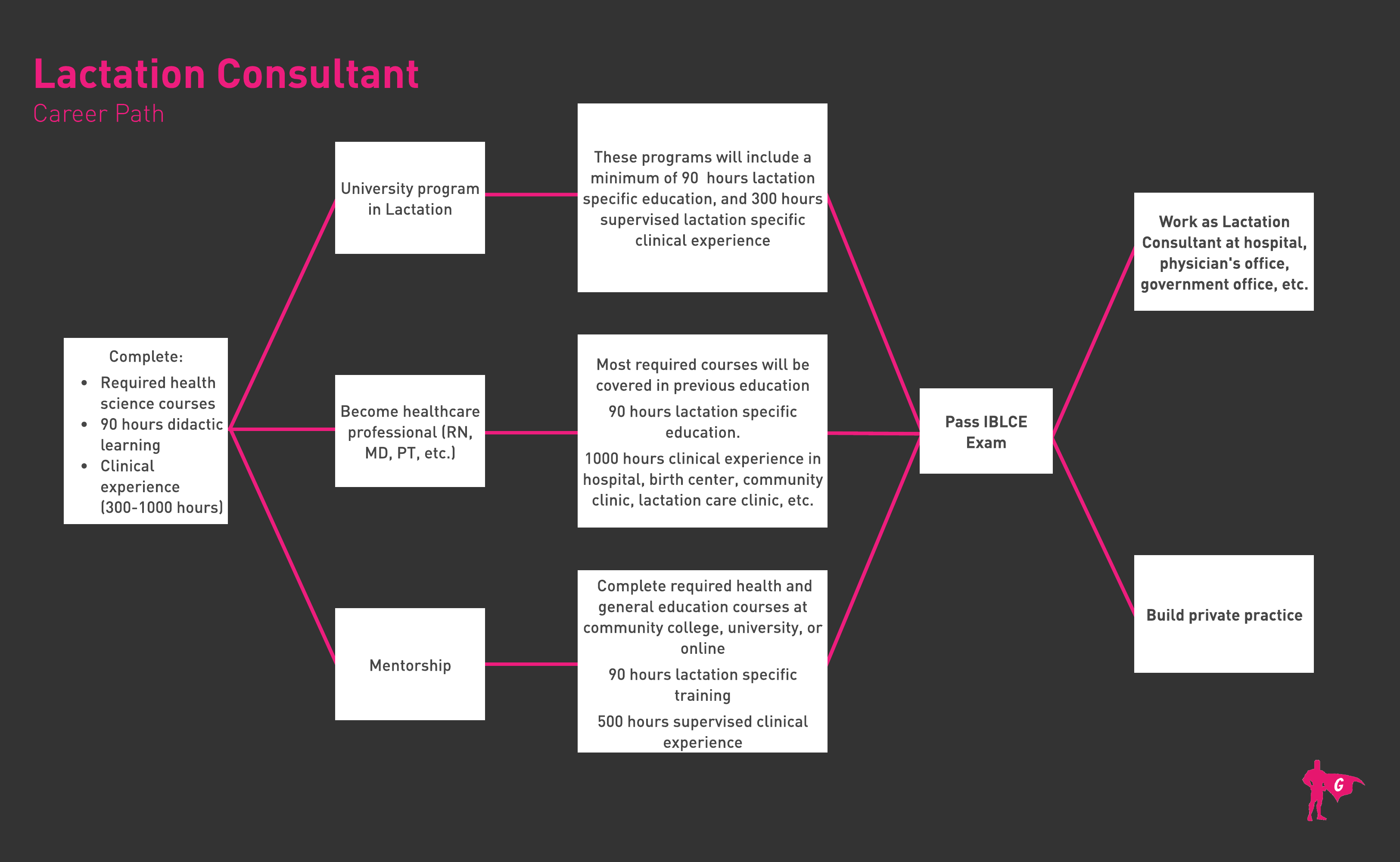
The gold standard in this field is the International Board Certified Lactation Consultant (IBCLC) credential, awarded through the International Board of Lactation Consultant Examiners (IBLCE) and its IBCLC Commission. The IBCLC exam is computer-based, with 175 multiple-choice questions, and is offered at set times each year. To qualify, you must complete health sciences education (or already be a recognized health professional), 95 hours of lactation-specific education (including 5 hours on communication skills and at least 2 hours on the WHO Code), and a set number of clinical hours, all within five years before applying. You must also follow the IBCLC code of professional conduct. IBCLCs recertify every five years, through continuing education or by exam.
The 14 health science subjects include biology, human anatomy, human physiology, infant and child growth and development, nutrition, psychology or counseling skills, sociology or cultural sensitivity, introduction to clinical research, and professional topics such as medical documentation, medical terminology, ethics, infection control, occupational safety, and basic life support (CPR). Recognized health professionals, such as nurses, physicians, midwives, dietitians, physical therapists, occupational therapists, pharmacists, speech-language pathologists, and dentists, can satisfy this requirement through their education. Everyone else must complete the courses.
There are three pathways, which differ in how you earn clinical hours. Pathway 1 is for recognized health professionals and for breastfeeding support counselors in a recognized organization, and requires 1,000 hours of lactation-specific clinical practice, which do not need to be directly supervised. Pathway 2 is for graduates of an accredited academic lactation program, which includes 300 hours of directly supervised clinical practice built into the program; these programs are accredited by the Commission on Accreditation of Allied Health Education Programs (CAAHEP) or an equivalent body, with review by the Lactation Education Accreditation and Approval Review Committee (LEAARC). Pathway 3 is mentorship with a currently certified IBCLC, and requires 500 hours of directly supervised practice under a plan approved by the IBCLC Commission before you begin earning hours. Requirements are updated from time to time, so always confirm the current details with the IBCLC Commission before you enroll.
It is important to understand that other lactation credentials are different. Certified Lactation Counselor (CLC) training, such as the course offered by the Healthy Children Project and credentialed through the Academy of Lactation Policy and Practice, is shorter and focuses on education and basic counseling and support, with referral for complex problems. Other titles include Certified Breastfeeding Counselor, Certified Lactation Educator, peer counselor, and La Leche League Leader. These roles are valuable, and several can be a first step toward the IBCLC, but the IBCLC is the highest level of clinical lactation credential and the one most hospitals, clinics, and insurers look for. A few states, including Georgia, New Mexico, Oregon, and Rhode Island, have licensing laws for lactation consultants, so check the rules where you plan to work.
Students can take courses in relevant subjects such as:
- Biology
- Human Anatomy and Physiology
- Nutrition
- Child Growth and Development
- Psychology
- Sociology or Cultural Anthropology
- Medical Terminology
- Communication and Counseling Skills
- Research Methods and Statistics
- Spanish or another world language
Hands-on experience is the heart of training. You can gain it through clinical hours in a hospital, clinic, or private practice, supervised by a certified IBCLC, or through the clinical component of an academic program. Volunteering as a peer supporter, working in a WIC clinic, or shadowing an IBCLC is a smart way to learn what the work involves and make contacts. Learning never ends, and IBCLCs take regular continuing education courses and keep up with research to maintain their certification.
- Take biology, anatomy, health science, psychology, and communication classes
- Join HOSA or a health science club and look for opportunities to practice teaching and public speaking
- Shadow or interview an IBCLC to see their daily routine and ask how they got started
- Volunteer with a hospital, community health center, WIC office, or parent support group
- Take a child care, babysitting, or CPR and first aid course to gain comfort with babies and emergencies
- Learn a second language, especially one common in your community, to serve more families
- Read books and listen to podcasts by lactation experts and parents so you hear many points of view
- Look into nursing, dietetics, midwifery, or other health professions, which satisfy many of the IBCLC education requirements and open more job options
- If you are considering Pathway 2 or 3, compare programs and mentors early and map out your timeline for hours and courses
- Learn about the WHO International Code of Marketing of Breast-milk Substitutes and the importance of unbiased, evidence-based care
- Build business basics, such as marketing, writing, and social media, if you think you may want a private practice
- Look for scholarships and tuition help from lactation organizations and training providers
- A program that clearly matches one of the three IBCLC pathways and explains exactly which requirements it covers
- For Pathway 2, accreditation by CAAHEP or an equivalent body, recommended by LEAARC
- A curriculum that includes the full 90 hours of lactation-specific education, plus 5 hours of communication skills
- Built-in, supervised clinical placements with a plan for finding enough hours
- Instructors and mentors who are experienced, currently certified IBCLCs
- Coverage of the health science subjects, so you do not have to hunt for them separately
- A teaching approach that includes diverse families, inclusive language, and culturally respectful care
- Strong exam preparation and a track record of graduates passing the IBCLC exam
- Flexible formats, such as online coursework with local clinical sites
- Training in documentation, ethics, and the code of professional conduct
- Business and marketing content if you plan to start a private practice
- Transparent costs, payment plans, and information about scholarships, since financial aid may not be available for every pathway
- Finish your education and clinical hours, pass the IBCLC exam, and then look at the state licensing rules where you plan to work
- Start by searching for titles like Lactation Consultant, Lactation Support Specialist, Breastfeeding Peer Counselor, and Maternal-Child Health Specialist
- Check job boards and career pages at hospitals, pediatric practices, community health centers, WIC agencies, and public health departments
- Use your clinical supervisors and mentors, who often know about job openings before they are posted
- Join professional groups like the International Lactation Consultant Association and the United States Lactation Consultant Association, where you can find job listings and meet other lactation professionals
- Attend local breastfeeding coalition meetings, support groups, and conferences to build relationships
- Tailor your resume to show clinical hours, populations you have worked with, languages, teaching experience, and any health professional credentials
- Prepare for interviews with real examples of how you have handled difficult cases, supported family choices, and worked with a care team
- Consider starting part-time or per-visit while you build experience, since many first jobs begin this way
- If you want a private practice, build referral relationships with pediatricians, midwives, doulas, and obstetricians, and learn about insurance billing, business licenses, and liability insurance
- Offer classes, support groups, or virtual visits to introduce yourself to the community
- Follow up on every application and send a thank-you note after interviews
- Build a reputation for kind, clear, evidence-based care that families and providers trust
- Take on leadership roles such as lead lactation consultant, lactation program coordinator, or breastfeeding program director
- Earn additional degrees or credentials in nursing, public health, or health administration to open management positions
- Specialize in areas like NICU lactation, tongue-tie and oral function, peer counselor training, or lactation research
- Teach classes, train staff, or become a clinical mentor for people earning their hours
- Grow a private practice by building referral relationships, a strong online presence, and in-network insurance relationships
- Contribute to research, write for professional journals, or speak at conferences
- Stay active in professional organizations and advocacy groups that shape policy and access to lactation care
Websites:
- International Board of Lactation Consultant Examiners (IBLCE) - iblce.org
- IBCLC Commission - ibclc-commission.org
- International Lactation Consultant Association (ILCA) - ilca.org
- United States Lactation Consultant Association (USLCA) - uslca.org
- Lactation Education Accreditation and Approval Review Committee (LEAARC) - leaarc.org
- Academy of Lactation Policy and Practice (ALPP) - alpp.org
- La Leche League USA - lllusa.org
- Academy of Breastfeeding Medicine - bfmed.org
- United States Breastfeeding Committee - usbreastfeeding.org
- Black Mothers' Breastfeeding Association - bmbfa.org
- Association of Women's Health, Obstetric and Neonatal Nurses (AWHONN) - awhonn.org
- Human Milk Banking Association of North America - hmbana.org
- Baby-Friendly USA - babyfriendlyusa.org
Books:
- Breastfeeding: A Guide for the Medical Profession by Ruth A. Lawrence and Robert M. Lawrence
- Counseling the Nursing Mother: A Lactation Consultant's Guide by Judith Lauwers and Anna Swisher
- Breastfeeding Answers by Nancy Mohrbacher
- Making More Milk by Lisa Marasco and Diana West
- The Art of Breastfeeding by La Leche League International
If you find that being a Lactation Consultant isn't the right fit, your interest in babies, families, and health can lead to many other rewarding careers.
- Registered Nurse
- Certified Nurse-Midwife
- Doula
- Registered Dietitian
- Pediatric Nurse
- Childbirth Educator
- Community Health Worker
- Public Health Educator
- Medical Assistant
- Parent Educator
“Many employers look for lactation consultants who are also registered nurses. If you have any interest in nursing, this may be a good path for you.”
“You need to have passion and an ability to market yourself.”
Newsfeed

Featured Jobs
Online Courses and Tools
Annual Salary Expectations
New workers start around $39K. Median pay is $41K per year. Highly experienced workers can earn around $49K.