




Spotlights
Certified Pharmacy Technician (CPhT), Registered Pharmacy Technician (RPhT), Pharmacy Tech, Compounding Technician, Sterile Compounding Technician, IV Room Technician, Chemotherapy Pharmacy Technician, Operating Room Pharmacy Technician, Retail Pharmacy Technician, Hospital Pharmacy Technician, Pharmacy Technician Lead, Pharmacy Informatics Technician
Think about the last time someone you know picked up a prescription. Maybe it was an antibiotic for a sore throat, an inhaler for asthma, or a medicine that helps a grandparent manage blood pressure. Before that small paper bag reached the counter, a team made sure it held the right medicine, in the right strength, with the right label, for the right person. A Pharmacy Technician is a key member of that team. They are the people who keep the pharmacy running, who catch the tiny details that keep patients safe, and who are often the friendly face a patient sees first.
Pharmacy Technicians work side by side with pharmacists, who are the licensed medication experts. Under a pharmacist's supervision, technicians receive and enter prescriptions, count and measure medications, prepare and label them, check inventory, and handle insurance questions. In a neighborhood pharmacy, that might mean greeting regulars by name, helping a worried parent figure out why a claim was rejected, and getting an urgent medicine ready for a sick child. In a hospital, it can mean filling carts with medications for each patient floor, preparing sterile IV bags in a special clean room, or delivering time-sensitive drugs to the emergency department. The pharmacist makes the final clinical decisions and counsels patients, and the technician makes sure everything around those decisions runs smoothly, accurately, and on time.
To do this work, Pharmacy Technicians use pharmacy computer systems, barcode scanners, automated dispensing machines and cabinets, and, in some settings, specialized equipment for sterile and hazardous drug preparation. They rely on careful math, a growing knowledge of medication names and uses, and strict safety routines. Their work matters because medication mistakes can seriously hurt people, and a sharp-eyed technician often spots the wrong strength, the mixed-up name, or the missing detail before it ever leaves the pharmacy. Day after day, they help people get the medicines they need to feel better, stay healthy, and live their lives.
- Helping people get the medicine they need, often at moments when they are sick, worried, or in pain
- Catching mistakes before they reach a patient and knowing your attention to detail protects real people
- Entering healthcare without a four-year degree, with clear steps for growing into specialties, leadership, or even pharmacy school
- Learning something new all the time, from new medications to new technology, in a role where no two days are exactly alike
Working Schedule
Most Pharmacy Technicians work full-time, though part-time work is common, especially for students and people balancing other responsibilities. Hours depend heavily on the setting. Community pharmacies in drugstores and grocery stores usually keep long store hours, so technicians often work evenings, weekends, and some holidays, and some locations stay open late or around the clock. Hospital pharmacies run 24 hours a day, seven days a week, because patients need medicine at all times, which means rotating shifts that can include overnights. Mail-order and specialty pharmacies often follow more regular business hours but have strict deadlines to get packages out the door. Technicians spend much of the shift on their feet, moving between the counter, the shelves, the computer, and the workstation where medications are counted and prepared. Pharmacies can be fast and busy, especially when many prescriptions arrive at once, so technicians learn to stay organized and calm in the rush. Technicians in sterile compounding areas work in a quiet, controlled environment, wearing protective gowns, gloves, masks, and hair covers.
Typical Duties
- Receiving prescriptions from patients, doctors' offices, and hospital units, and entering the information into the pharmacy computer system accurately
- Counting, measuring, and preparing medications, such as tablets, capsules, liquids, creams, and drops, under a pharmacist's supervision
- Printing, applying, and double-checking labels, and packaging prescriptions in the correct containers
- Checking that patient information, medication names, strengths, and directions match the prescription before passing it to the pharmacist
- Processing insurance claims, solving rejections, and helping patients understand copays and coverage
- Ordering, receiving, and shelving medications and supplies, and rotating stock so that the oldest products are used first
- Watching expiration dates and removing expired or recalled products from the shelves
- Answering phones, taking refill requests, and calling doctors' offices to get missing information at the pharmacist's direction
- Checking out patients, confirming their identity, and referring any medication question to the pharmacist
- Preparing sterile products, such as IV bags and syringes, using clean room technique (in hospitals and some specialty pharmacies)
- Loading and maintaining automated dispensing machines and medication cabinets on hospital floors
- Following strict rules for controlled substances, including counts, secure storage, and careful record keeping
Additional Responsibilities
- Training new technicians and pharmacy interns on procedures and computer systems
- Compounding nonsterile preparations, such as creams, ointments, and custom liquid medications, according to written formulas
- Helping run medication safety programs by reporting near misses and suggesting ways to prevent errors
- Preparing for inspections by state boards of pharmacy and accreditation groups by keeping records and cleaning logs up to date
- Giving immunizations in states and pharmacies that allow trained technicians to do so
- Taking part in tech-check-tech programs, where trained technicians double-check the work of other technicians, in states that permit it
- Supporting medication reconciliation, such as gathering a patient's list of medications when they arrive at the hospital
- Managing supplies, budgets, schedules, or inventory systems as a lead technician or supervisor
A community Pharmacy Technician's day often begins by getting the pharmacy ready for the public. They log into the computer system, check the overnight queue of refill requests and e-prescriptions, and look at what must be done first, such as prescriptions promised for early pickup or urgent hospital discharge medicines. They restock the fast-moving items, check the counting trays and the automated refrigerator temperature log, and make sure the labels and bags are stocked. As the doors open, the phone starts to ring and patients arrive at the drop-off window.
By midday, the pace is a mix of steady work and sudden surprises. A technician types in a new prescription, checks it against the patient's profile, counts out the pills, and slides the finished bottle and paperwork to the pharmacist for the final check. A call comes in from a patient whose insurance claim bounced back, so the technician investigates, calls the insurance help line, and finds that the plan requires a different version of the medicine, which the pharmacist then discusses with the doctor. A worried parent asks whether a liquid antibiotic needs to stay in the fridge, and the technician knows exactly when to hand that question to the pharmacist. In between, a delivery arrives, and the technician checks it against the order and shelves it. In a hospital pharmacy, the same hours might involve preparing IV medications in a clean room, restocking the medication cabinets on the surgical floor, and rushing a critical drug to the emergency department.
Late in the day, the technician catches up on refills that need doctor approval, runs through the list of items waiting for pickup, returns uncollected prescriptions to stock, and double-checks the controlled substance count with the pharmacist. They clean and organize the counting area, update the inventory list for the next day's order, and share any important notes with the evening shift so that nothing gets lost in the handoff. Even on a long, hectic shift, they leave knowing they helped dozens of people get what they needed.
Soft Skills
- Extreme attention to detail, since one wrong number, letter, or label can change a medication or its dose
- Calm, steady focus in a busy environment with phones ringing, lines forming, and deadlines approaching
- Friendly, clear communication with patients of all ages, backgrounds, and moods, including people who are sick, rushed, or frustrated
- Respect for privacy and confidentiality, since patient health information must be protected
- Honesty and integrity, especially when handling controlled substances and reporting mistakes
- Teamwork with pharmacists, other technicians, nurses, and doctors' office staff
- Problem solving, such as figuring out why a claim was rejected or a medication is out of stock
- Organization and time management, to juggle multiple tasks without letting anything slip
- Willingness to ask questions and double-check rather than guess
- Patience and empathy for patients who are confused about their medicines or worried about costs
- Dependability, since pharmacies need people who show up on time and follow procedures every time
- Adaptability, as technology, insurance rules, and workflows keep changing
Technical Skills
- Knowledge of common medication names, both brand and generic, and the ability to catch look-alike and sound-alike names
- Pharmacy math, including conversions, ratios, dosing calculations, and days-supply calculations
- Understanding of medical terminology and common prescription abbreviations
- Accurate data entry and use of pharmacy management software and electronic health records
- Knowledge of pharmacy law, including state rules and federal rules for controlled substances and patient privacy
- Safe handling and storage of medications, including refrigerated products and hazardous drugs
- Sterile and nonsterile compounding techniques, including clean room practices and aseptic technique
- Use of barcode scanning, automated counting machines, and dispensing robots
- Knowledge of insurance billing, prior authorization, and third-party claims
- Inventory management, including ordering, receiving, and tracking expiration dates and recalls
- Retail or Community Pharmacy Technician: Fills prescriptions, assists customers, and processes insurance in drugstores, grocery stores, and independent pharmacies
- Hospital Pharmacy Technician: Prepares and delivers medications for inpatients, refills dispensing cabinets, and works closely with nurses and doctors
- Sterile Compounding (IV Room) Technician: Prepares IV bags, syringes, and other sterile medications in a clean room, including chemotherapy and other hazardous drugs
- Compounding Technician: Makes custom medications, such as flavored liquids or special creams, from written formulas
- Specialty or Mail-Order Pharmacy Technician: Prepares and ships medications for long-term or complex conditions, and works with patients by phone and online
- Long-Term Care Pharmacy Technician: Packages medications for nursing homes and assisted living centers, often in blister packs and carefully organized carts
- Pharmacy Informatics or Automation Technician: Manages dispensing robots, cabinets, and software systems
- Lead or Supervising Technician: Oversees schedules, training, inventory, and quality checks for a team
- National chain drugstores
- Grocery stores and big-box retail pharmacies
- Independent neighborhood pharmacies
- Community and university hospitals
- Children's hospitals and cancer centers
- Mail-order and online pharmacies
- Long-term care and nursing home pharmacy providers
- Specialty pharmacies for complex or rare conditions
- Home infusion pharmacies that prepare medications for patients treated at home
- Outpatient clinics and health systems
- Military, Veterans Affairs, and other government pharmacies
- Pharmacy benefit managers and health insurance companies
Pharmacy Technicians carry a lot of responsibility for a job that does not require a four-year degree. Accuracy matters at every step, and the work involves repeating the same careful checks again and again, even during a rush. Technicians can feel pressure when lines are long, phones are ringing, and patients are waiting, especially in busy retail pharmacies where staffing can be tight. Patients are sometimes upset about long waits, insurance costs, or medication shortages, and technicians often become the person who takes the first wave of frustration, even when the problem is outside their control. Staying kind, patient, and professional in those moments is a skill that takes practice.
The work is also physical. Technicians stand for most of their shifts, reach for shelves, lift boxes of supplies, and repeat the same motions many times a day. Schedules often include evenings, weekends, holidays, and early mornings. Hospital pharmacies run around the clock, so overnight shifts are part of the job for many technicians. Technicians who prepare sterile or hazardous medications must follow strict gowning and safety procedures, which can feel slow and repetitive but protect both the patient and the technician.
Becoming a Pharmacy Technician also involves meeting background and legal requirements. Most states require technicians to register or be licensed with the state board of pharmacy, and many require or prefer national certification. Because pharmacies handle valuable and controlled medications, technicians go through background checks, and certain convictions can keep someone from being registered or certified. Technicians must also keep up with continuing education to maintain their credentials. Those who thrive in this career love organization, enjoy helping people, and take pride in doing small things exactly right.
- More automation, such as dispensing robots, automatic pill counters, and barcode checks, which reduce errors and free technicians to focus on higher-level tasks
- Expanded technician roles in many states, including giving immunizations, taking medication histories, verifying products in tech-check-tech programs, and supporting patient care services
- Growth of mail-order, delivery, and online pharmacies, which creates jobs in packing, shipping, and customer support
- Rising demand for sterile and hazardous drug compounding in hospitals, infusion centers, and specialty pharmacies, guided by national safety standards
- Telepharmacy, where technicians prepare medications at remote or rural sites while a pharmacist supervises by video, in states that allow it
- Specialty medications for complex conditions such as cancer, rheumatoid arthritis, and rare diseases, which require careful handling and patient support
- Stronger systems for preventing medication errors, including barcode scanning, double checks, and reporting of near misses
- Electronic prescribing and digital tools that send prescriptions straight to the pharmacy and let patients track refills on their phones
- More attention to preventing drug diversion, which is the misuse or theft of controlled medications, and training technicians to spot warning signs
- Advanced credentials and specialized roles, such as sterile compounding, medication history, and product verification, that allow technicians to build a career ladder
Many Pharmacy Technicians were kids who liked sorting, organizing, and getting things exactly right. They enjoyed puzzles, board games with lots of small pieces, and projects that needed careful counting or measuring, like baking from a recipe or building models. They were often drawn to science classes, especially biology and chemistry, and enjoyed math problems that had a clear answer. Some were the ones who kept track of the family's medicines, helped a grandparent organize a weekly pill box, or went along to the pharmacy and found the shelves of tiny bottles fascinating.
Others were natural helpers who liked talking with people, volunteering, or working in a store, library, or restaurant. They were calm when things got busy, and friends and classmates counted on them to remember details and follow through. Some had a family member with a long-term illness and saw how important a kind and capable pharmacy team can be. Many found that the pharmacy blended their interest in science, their love of order, and their wish to help people in a very practical way.
Pharmacy Technician requirements differ from state to state, so the most important first step is to look up your state board of pharmacy and read exactly what it requires. In general, you need a high school diploma or GED to start. From there, you can learn the job in several ways. Some people are trained on the job by their employer, especially in retail pharmacies. Others complete a formal pharmacy technician program at a community college, vocational school, hospital, or in the military. Programs range from a few months to about two years and may result in a certificate, diploma, or associate degree. Many include classroom lessons, lab practice, and an externship in a real pharmacy.
Look for programs accredited through the partnership between the American Society of Health-System Pharmacists (ASHP) and the Accreditation Council for Pharmacy Education (ACPE). Accredited programs follow national standards and include a minimum number of hours of classroom, lab, and real pharmacy experience. Most states require technicians to register or be licensed with the state board of pharmacy, and rules may cover age, education, background checks, training hours, and fees. Many states and employers also require or prefer national certification.
The two main national certifying groups are the Pharmacy Technician Certification Board (PTCB), which awards the Certified Pharmacy Technician (CPhT) credential after you pass the Pharmacy Technician Certification Exam (PTCE), and the National Healthcareer Association (NHA), which offers the ExCPT exam for its Certified Pharmacy Technician credential. To qualify for the PTCB exam, you generally need to complete a PTCB-recognized education and training program or document a required amount of pharmacy work experience. Certification must be renewed every two years with continuing education, including pharmacy law and patient safety. PTCB also offers advanced credentials and certificates in areas such as sterile compounding, hazardous drugs, controlled substances diversion prevention, product verification, and point-of-care testing, which can open doors to specialized roles.
Students can take courses in relevant subjects such as:
- Biology and Human Anatomy
- Chemistry
- Algebra and Applied Math
- Health Science or Medical Terminology
- Introduction to Pharmacology
- Pharmacy Law and Ethics
- Pharmacy Calculations
- Computer Applications and Keyboarding
- Customer Service and Communication
- Business or Health Care Administration
Hands-on experience is the heart of training. During an externship, students work in a pharmacy under the guidance of experienced staff and practice filling prescriptions, entering orders, handling insurance, and talking with patients. Even outside school, you can build experience by working in a store, volunteering at a hospital or clinic, or shadowing a Pharmacy Technician. Employers often hire students who impressed them during their externship, so treat every placement like a long job interview.
Learning does not stop after you are hired. Technicians complete continuing education to renew certification and registration, adapt to new technology and safety rules, and may earn extra credentials as their interests grow.
- Take science and math classes, especially biology, chemistry, and algebra, since measuring and calculating are part of the job every day
- Look for a health science career and technical education pathway at your school or a local career center, which may offer pharmacy technician training
- Join HOSA - Future Health Professionals or another health club to explore careers, compete in skill events, and meet others interested in healthcare
- Look up your state board of pharmacy and read its pharmacy technician requirements, including age, training, background check, and certification rules
- Ask a local pharmacy whether you can shadow a Pharmacy Technician or tour the pharmacy, including the back area where medications are prepared
- Volunteer at a hospital, clinic, senior center, or community health event to get comfortable around patients and practice customer service
- Take a part-time job in retail, food service, or an office to build teamwork, cash handling, and customer service skills
- Practice careful, accurate work, such as double-checking math, labeling projects, or proofreading, since accuracy is the heart of the job
- Learn basic typing and computer skills, because fast, accurate data entry is an everyday task
- Keep a clean record and make good choices, since pharmacies require background checks and certain convictions can block registration
- Browse job ads for Pharmacy Technicians in your area to see which requirements and certifications local employers want
- Talk with a school counselor about dual enrollment, a community college program, or a plan that could eventually lead to pharmacy school if you want to become a pharmacist
- Accreditation through the ASHP and ACPE partnership, which employers widely recognize
- Approval or recognition by your state board of pharmacy, if your state requires it
- A program that is recognized by the PTCB as meeting its education requirements, so you can sit for the CPhT exam
- A required externship in a real pharmacy, ideally with the chance to try both retail and hospital settings
- Clear information about the national certification exam pass rates and how the program prepares students for the test
- Hands-on labs with realistic practice in counting, labeling, compounding, and sterile technique
- Instructors who have worked as pharmacists or technicians and can share real-world experience
- Coverage of pharmacy law, medication safety, calculations, and customer service
- Job placement help, such as career fairs, resume support, or partnerships with local pharmacies
- Reasonable cost and a clear explanation of tuition, supplies, exam fees, and background check costs, plus financial aid options
- Flexible scheduling, such as evening or online classes, if you need to work while you study
- A pathway to credit toward an associate degree or a pharmacy-related bachelor's if you want to keep going
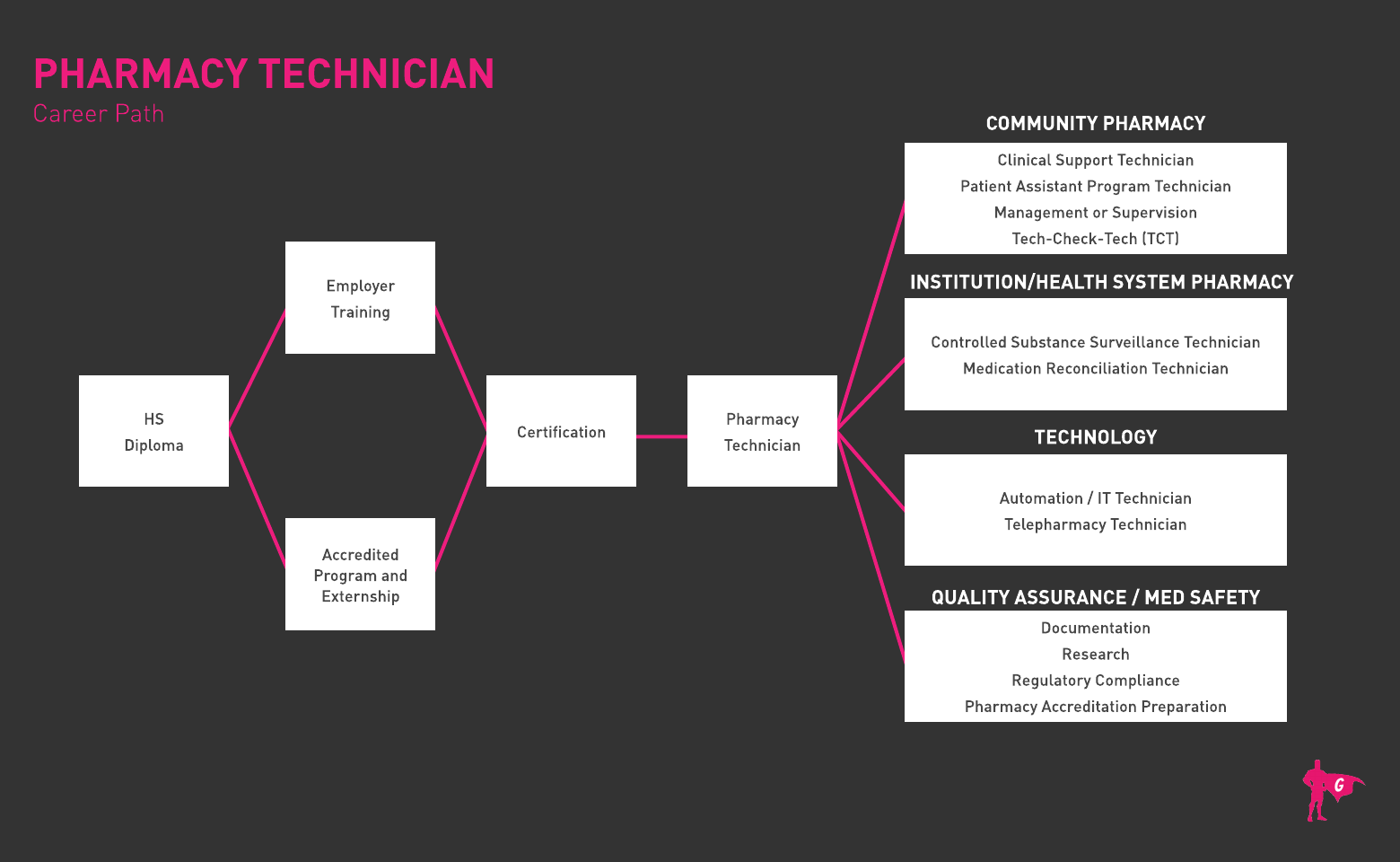
- Complete a training program or on-the-job training that fits your state's requirements, and apply for your state registration or license early, since processing can take time
- Earn your PTCB or NHA certification even if your state does not require it, since many employers prefer or require it
- Use your externship as a long interview: show up early, ask questions, stay calm, and ask about openings before you finish
- Search for entry-level Pharmacy Technician, Pharmacy Clerk, Pharmacy Assistant, or Technician Trainee jobs on major job boards, employer websites, and hospital career pages
- Apply to a mix of settings, such as chain drugstores, grocery pharmacies, independent pharmacies, hospitals, and mail-order centers, to see which fits you best
- Build a clear one-page resume with your training, externship, certifications, math and computer skills, and any customer service experience
- Be completely honest on your background check questions and application, and talk with your program director if you have concerns
- Tell friends, teachers, classmates, and former supervisors you are looking, since many pharmacy jobs are filled through personal connections
- Ask your school's career center or program director about job placement help and partnerships with local pharmacies
- Prepare for interview questions such as how you would handle an upset customer, what you would do if you noticed an error, and how you stay organized in a busy setting
- Practice mock interviews, bring questions about training, scheduling, and teamwork, and dress neatly and professionally
- Keep your social media professional, since employers may look at it
- Earn advanced credentials, such as sterile compounding, hazardous drugs, medication history, or product verification, to qualify for higher-level technician roles
- Ask your pharmacist or supervisor to teach you new tasks, including inventory, insurance billing, or automation, and volunteer to train new hires
- Move into specialized settings, such as hospital sterile compounding, oncology, specialty pharmacy, or pharmacy informatics, where extra skills are valued
- Apply for lead technician, supervisor, inventory buyer, or pharmacy operations roles that involve scheduling, training, and managing workflows
- Explore tech-check-tech and other expanded roles where state rules allow, since these show strong accuracy and trustworthiness
- Take college courses while working, with the support of tuition assistance if your employer offers it, toward an associate or bachelor's degree
- Use your experience as a stepping stone to pharmacy school, nursing, or other health careers if you want to become a pharmacist or move into patient care
- Stay active in professional groups for pharmacy technicians to learn, build a network, and keep up with changes in the field
Websites:
- Pharmacy Technician Certification Board (PTCB) - ptcb.org
- National Healthcareer Association (NHA) - nhanow.com
- American Society of Health-System Pharmacists (ASHP) - ashp.org
- Accreditation Council for Pharmacy Education (ACPE) - acpe-accredit.org
- National Association of Boards of Pharmacy (NABP) - nabp.pharmacy
- American Pharmacists Association (APhA) - pharmacist.com
- United States Pharmacopeia (USP) - usp.org
- Institute for Safe Medication Practices (ISMP) - ismp.org
- National Community Pharmacists Association (NCPA) - ncpa.org
- National Association of Chain Drug Stores (NACDS) - nacds.org
- MedlinePlus, drug and health information from the National Library of Medicine - medlineplus.gov
- Pharmacy Times - pharmacytimes.com
- HOSA - Future Health Professionals - hosa.org
Books:
- Mosby's Pharmacy Technician: Principles and Practice by Karen Davis and Anthony Guerra
- Understanding Pharmacology for Pharmacy Technicians by Mary Ann Stuhan
- Pharmacy Calculations for Technicians by Skye A. McKennon
- Pharmacy Practice for Technicians by Skye A. McKennon
If you find that being a Pharmacy Technician isn't the right fit, your interest in medicine, accuracy, and helping people can lead to many other rewarding careers.
- Medical Assistant
- Phlebotomist
- Medical Laboratory Technician
- Health Information Technician
- Medical Biller and Coder
- Surgical Technologist
- Licensed Practical Nurse
- Registered Nurse
- Dental Assistant
- Pharmacist
Newsfeed

Featured Jobs
Online Courses and Tools
Annual Salary Expectations
New workers start around $48K. Median pay is $56K per year. Highly experienced workers can earn around $74K.