





Spotlights
News Photographer, Documentary Photographer, Visual Journalist, Photo Correspondent, Press Photographer, Multimedia Journalist, Photo Reporter, Photojournalism Specialist, Visual Storyteller, News Imagery Specialist
When breaking news happens or history unfolds, the images that reach the public often come from Photojournalists on the ground. They turn fast-moving reality into visual stories that inform, provoke, and connect communities!
Photojournalists capture still photographs and increasingly video for news outlets, magazines, digital platforms, and documentary projects. They research stories, travel to locations, compose strong images under deadline, and work with editors to tell accurate, ethical visual narratives. They may cover politics, sports, culture, conflicts, or everyday life in their communities.
They use professional cameras, lenses, lighting, and editing software while adhering to journalistic standards. Whether in a newsroom or freelancing, their work shapes how the public understands the world.
• Documenting history and giving voice to important stories
• Creative freedom in how moments are framed and captured
• Variety—every assignment brings new people, places, and challenges
• Seeing your work published and making an impact on public discourse
Working Schedule
Photojournalists work irregular hours tied to news cycles. Early mornings, nights, weekends, and holidays are common when events break. Staff photographers may have assigned shifts; freelancers juggle multiple clients and pitch stories on deadline.
Typical Duties
- Capture newsworthy photographs and video in the field
- Edit, caption, and transmit images to meet publication deadlines
- Research and pitch visual story ideas to editors
- Maintain camera, lens, and audio gear in working order
- Obtain releases and permissions when required
- Collaborate with reporters, producers, and photo editors
- Archive and keyword images for future use
- Follow ethical guidelines and safety protocols in sensitive situations
- Shoot in varied lighting and weather conditions
- Provide accurate metadata and context for every image
Additional Responsibilities
- Manage social media posting for breaking visual stories
- Shoot accompanying B-roll or short-form video for digital platforms
- Build relationships with sources and community leaders
- Stay current on platform specs for web, print, and mobile
- Travel on short notice for assignments domestically or abroad
Morning may start with checking news feeds, editor requests, and weather for outdoor shoots. A photojournalist might cover a press conference, sports game, or feature profile—all before noon.
Afternoons often involve editing selects, writing captions, and filing images through content management systems. Breaking news can redirect the entire day instantly.
Evenings might include covering community events or processing same-day galleries. Freelancers also invoice clients and plan upcoming pitches.
Soft Skills
- Ethical judgment and commitment to accuracy
- Calm under pressure in chaotic environments
- Strong interpersonal skills with subjects and officials
- Cultural sensitivity and empathy
- Self-direction and time management
- Persistence to access difficult stories
- Adaptability with gear and locations
- Communication with editors and teammates
- Resilience when facing rejection or dangerous settings
- Story sense—knowing when a moment matters
Technical Skills
- DSLR/mirrorless camera operation and manual exposure
- Photo editing in Adobe Lightroom and Photoshop
- Video capture and basic editing for digital news
- Lighting for indoor and outdoor situations
- Color correction and file delivery standards
- FTP/mobile transmission workflows
- Metadata, caption writing, and keywording
- Drone operation where licensed and permitted
- Staff News Photographers: Employed by newspapers, TV stations, or digital outlets
- Freelance Photojournalists: Sell stories and images to multiple publications
- Sports Photojournalists: Cover games, athletes, and sports culture
- Feature/Documentary Photographers: Longer-form visual storytelling
- Conflict and International Photographers: Report from war zones and crises
- Multimedia Journalists: Combine photo, video, audio, and text
- Daily newspapers and digital news sites
- Television and streaming newsrooms
- Magazines and wire services (AP, Reuters, Getty)
- Photo agencies and syndicates
- Nonprofit and advocacy organizations with media teams
- Sports leagues and team media departments
- Freelance platforms and editorial markets
Photojournalism can be physically demanding—standing for hours, carrying heavy gear, and working in heat, cold, or crowds. Emotional toll comes from covering trauma, violence, or community loss.
Pay and job security vary widely; many markets have fewer staff positions than in past decades. Freelancers manage business tasks—insurance, taxes, gear replacement—on their own.
Despite challenges, professionals who thrive here are driven by witness and craft—the need to show truth visually.
- Multimedia skills expected—still + video + social-first formats
- AI and authenticity debates around edited vs. generated images
- Mobile journalism and live streaming from the field
- Subscription and membership-funded independent visual news
- Drone and 360 imagery where regulations allow
- Stronger emphasis on diversity in visual storytelling
- Remote editing and cloud-based newsroom workflows
Many photojournalists started with a camera in hand early—documenting friends, family events, or neighborhood scenes. They noticed light, composition, and moments others walked past.
School newspaper, yearbook, or AV club often sparked the path. Curiosity about people and current events combined with a drive to create images that tell the truth.
Photojournalists typically earn a bachelor’s degree in photojournalism, journalism, photography, or multimedia communications. Portfolio quality matters as much as credentials.
Students can take courses in relevant subjects such as:
- Photojournalism and documentary photography
- News writing and media ethics
- Digital imaging and editing
- Video production and multimedia storytelling
- Media law and First Amendment issues
- Visual design and layout for print/web
- History of photography and documentary film
Internships at newspapers, agencies, or newsrooms are critical for building a professional portfolio and industry contacts.
- Shoot for school paper, yearbook, or local news outlets
- Build a portfolio site with captioned, edited projects
- Enter student journalism and photography contests
- Learn Lightroom, Photoshop, and basic video editing
- Follow ethical standards—never stage news photos
- Intern during summers at media organizations
- Study great documentary photographers and news images
- Practice writing captions that explain context accurately
- Strong internship placement with news organizations
- Faculty with active journalism backgrounds
- Access to loaner cameras, lenses, and lighting gear
- Multimedia and digital-first curriculum
- Ethics and law courses specific to journalism
- Portfolio reviews and critique culture
- Student media outlets with real publication cycles
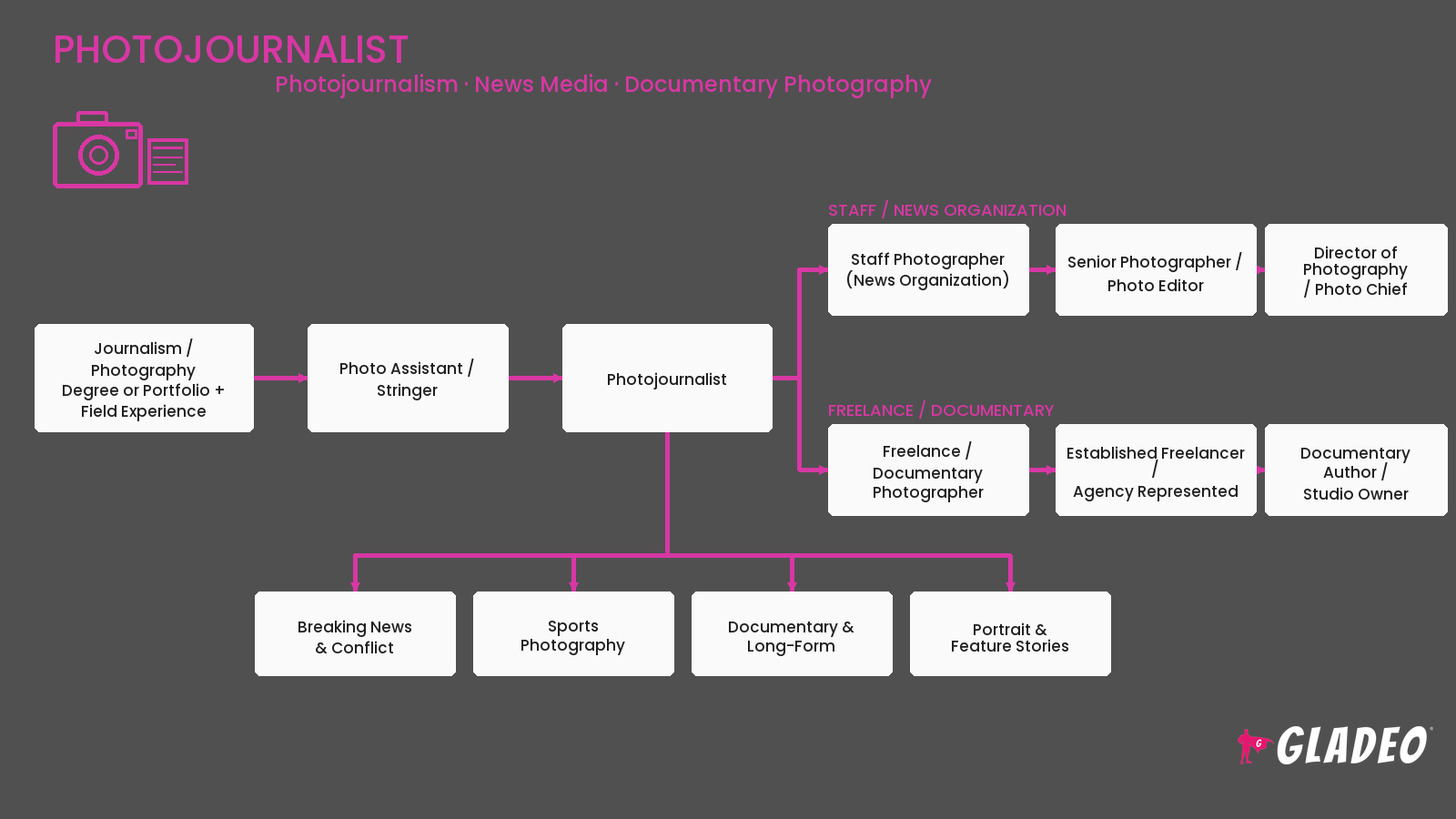
- Apply for internships and fellowships at newspapers and wire services
- • Pitch photo stories to local outlets and digital platforms
- • Entry-level titles: Staff Photographer, Photo Intern, Multimedia Intern, Visual Reporter
- • Maintain an online portfolio updated with best recent work
- • Network through NPPA events and journalism associations
- • Be willing to start in smaller markets to build clips
- • Develop video and audio skills alongside still photography
- Move from small-market papers to larger metros or national outlets
- Develop specialization—sports, politics, investigative visuals
- Win awards (POYi, Pulitzer submissions) to gain recognition
- Take photo editor or chief photographer roles
- Freelance for major magazines while retaining news credibility
Websites:
- National Press Photographers Association (NPPA)
- Poynter Institute
- Reuters and AP photography guidelines
- Lens blog (New York Times)
- Photojournalism links and ethics resources
Books:
- The Photographer’s Eye by Michael Freeman
- Witness in Our Time by Ken Light
- Get the Picture by John G. Morris
Related visual storytelling and media careers include:
- Commercial Photographer
- Video Journalist / Videographer
- Picture Editor or Photo Director
- Documentary Filmmaker
- Social Media Content Producer
- Camera Operator
- Visual Researcher
- Stock Photography Specialist
Newsfeed

Featured Jobs
Online Courses and Tools
Annual Salary Expectations
New workers start around $52K. Median pay is $77K per year. Highly experienced workers can earn around $112K.