





Spotlights
Physical Therapist Assistant (PTA), Physical Therapy Assistant, Licensed Physical Therapist Assistant (LPTA), Certified Physical Therapist Assistant (CPTA), Outpatient Physical Therapist Assistant, Home Health Physical Therapist Assistant, Acute Care Physical Therapist Assistant, Rehabilitation Physical Therapist Assistant, Pediatric Physical Therapist Assistant, Sports Medicine Physical Therapist Assistant, Per Diem Physical Therapist Assistant, Travel Physical Therapist Assistant
Imagine a high school athlete who tore a knee ligament and is wondering if they will ever play again. Or a grandparent who had a hip replacement and wants to walk to the mailbox without help. Or a child who is learning to use a walker for the first time. In each case, the person who shows up week after week to coach them through the hard exercises, adjust the plan when it hurts, celebrate every small win, and help them regain independence is very often a Physical Therapist Assistant. They are movement coaches, cheerleaders, and problem solvers, all in one.
Physical Therapist Assistants, or PTAs, are licensed or certified healthcare professionals who carry out treatment under the direction and supervision of a physical therapist (PT). The PT examines the patient, makes the diagnosis related to movement, and designs the plan of care. The PTA works with patients one-on-one to put that plan into action. They guide patients through exercises, teach them how to walk safely with crutches or a walker, use techniques like stretching, massage, heat, cold, and electrical stimulation to reduce pain, and watch closely for how the patient is responding. They record progress, tell the physical therapist what they notice, and teach patients and families how to continue the work at home. Because PTAs spend a lot of time with patients, they often build strong relationships and are the ones who notice the small changes that matter.
To do this work, PTAs use exercise equipment, balance tools, resistance bands, parallel bars, treadmills, ultrasound and electrical stimulation machines, hot and cold packs, and assistive devices like walkers, canes, and wheelchairs. They rely on a deep knowledge of anatomy and movement, plus patience, encouragement, and good judgment. Their work matters because moving is something most of us take for granted until we cannot. Helping a person get back to walking, playing a sport, picking up a grandchild, or simply getting out of bed without pain can change the course of someone's life.
- Seeing patients make real progress, from their first wobbly steps to their return to the sports and activities they love
- Building close, encouraging relationships with patients over weeks or months of treatment
- Working actively and creatively instead of sitting at a desk, with hands-on care and a variety of exercises and techniques
- Entering a respected healthcare career through a two-year degree, with options to specialize, move into leadership, or continue to become a physical therapist
Working Schedule
Physical Therapist Assistants usually work full-time, and part-time or per diem schedules are also common. Many PTAs work in outpatient clinics that run from early morning to early evening, which may include some evening or Saturday hours to meet the needs of patients who work or attend school. Hospitals, rehabilitation centers, and skilled nursing facilities often provide care seven days a week, so PTAs may work weekends and holidays. Home health PTAs travel from house to house with equipment, and their day may follow a route they plan with their team. School-based PTAs generally follow the school calendar. Travel PTAs take short-term assignments, often 13 weeks, in different cities. Most days are active, with a lot of standing, walking, bending, kneeling, and helping patients move, while a smaller part of the day goes to writing notes and talking with the physical therapist. Patients are scheduled in blocks, so the day often moves at a steady pace.
Typical Duties
- Reviewing the physical therapist's plan of care and preparing the treatment area and equipment before each patient arrives
- Observing and talking with patients about their pain, energy, and progress before, during, and after treatment
- Guiding patients through therapeutic exercises to build strength, flexibility, balance, and endurance
- Teaching patients to walk safely with crutches, canes, walkers, or braces, and practicing steps, transfers, and getting in and out of a car
- Using treatments such as stretching, soft tissue massage, heat, cold, ultrasound, electrical stimulation, and traction to reduce pain and improve movement
- Helping patients move safely from bed to chair, to standing, and to walking, using proper body mechanics and safety belts
- Measuring progress, such as range of motion, strength, and walking distance, and recording the results
- Reporting changes, concerns, or lack of progress to the supervising physical therapist right away
- Teaching patients and families home exercise programs and ways to prevent re-injury
- Fitting and adjusting assistive devices, such as splints, braces, and prosthetics, and teaching how to use them
- Monitoring vital signs, pain levels, and warning signs, such as dizziness, and stopping treatment when something does not seem right
- Documenting each visit in the patient's record, following legal and insurance requirements
Additional Responsibilities
- Cleaning and maintaining equipment, treatment tables, and exercise areas to keep patients safe
- Helping with patient scheduling, check-in, and basic clerical tasks, depending on the clinic
- Supervising physical therapy aides or technicians in some settings, as allowed by state rules
- Teaching injury prevention programs, balance classes, or wellness sessions for community groups
- Attending team meetings with nurses, doctors, occupational therapists, speech therapists, and case managers
- Taking part in continuing education and learning new techniques
- Mentoring PTA students during their clinical placements
- Supporting special programs, such as aquatic therapy, pediatric therapy, or sports performance training
A PTA in an outpatient orthopedic clinic often begins the day by reviewing the schedule and checking each patient's plan of care. They set out exercise bands, weights, and balance equipment, warm up the heat packs, and talk briefly with the physical therapist about patients who need extra attention. The first patient might be a teenager recovering from a knee surgery. The PTA checks how the knee is feeling, helps them warm up on a stationary bike, and guides them through leg raises, squats, and balance drills, giving feedback on form and encouraging them to push just a little further.
By late morning, the pace quickens as a series of patients rotate through. One is an adult with a bad shoulder who needs gentle stretching and strengthening. Another is an older patient with a recent fall who practices walking, stepping over obstacles, and standing up from a chair. The PTA uses electrical stimulation on a sore back for one patient, shows another how to use a resistance band at home, and stays alert for signs such as dizziness or increased pain. Between patients, the PTA writes short notes and flags a worry about a patient who is not making the expected progress for the physical therapist to examine.
In a hospital or skilled nursing facility, the day might look a little different. The PTA may help a patient with a stroke practice sitting up, standing, and taking a few steps with a walker while a nurse watches vital signs. Another patient is recovering from heart surgery and begins gentle movement. In the afternoon, the PTA finishes treatment notes, cleans the equipment, and meets with the PT, who reviews progress and makes any changes to the plan. At the end of the day, the PTA may be tired but happy, having helped several people move a little better than they did the day before.
Soft Skills
- Compassion and patience with patients who are in pain, discouraged, or frustrated by slow progress
- Encouraging communication, using clear instructions and positive feedback to motivate patients
- Listening carefully, to patients' goals, fears, and descriptions of what hurts
- Teamwork with physical therapists, nurses, doctors, and other therapists
- Good judgment, including knowing when to continue, change, or stop an activity, and when to call the PT
- Attention to detail, such as following the plan of care, monitoring safety, and recording accurate notes
- Physical stamina and strength to stand, walk, kneel, bend, and help patients move
- Adaptability, since every patient and every day is different
- Respect for patients' privacy, dignity, culture, and personal choices
- Creativity to find ways to make exercises more fun, especially with children and teens
- Time management to balance back-to-back patients with documentation
- Honesty and professionalism in staying within the limits of your role and your state's rules
Technical Skills
- Knowledge of anatomy, kinesiology, and how muscles, bones, joints, and nerves work together to produce movement
- Therapeutic exercise techniques for strength, flexibility, balance, and endurance
- Safe patient handling, including transfers, gait training, and use of gait belts, lifts, and assistive devices
- Treatment techniques such as heat, cold, ultrasound, electrical stimulation, traction, and soft tissue methods
- Measuring and recording data, such as range of motion, strength, and vital signs
- Understanding of common conditions, such as fractures, joint replacements, strokes, arthritis, and sports injuries
- Basic wound care and infection control, depending on the setting
- Documentation skills, including electronic health records and clear, legally correct notes
- Knowledge of medical terminology and insurance rules that affect treatment
- CPR and basic life support, and the ability to respond to emergencies such as falls
- Outpatient Orthopedic PTA: Helps patients recover from sports injuries, surgeries, and chronic pain in clinics
- Acute Care PTA: Works in hospitals to help patients move safely soon after surgery, illness, or injury
- Rehabilitation and Skilled Nursing PTA: Works with patients recovering from strokes, fractures, and long illnesses in rehabilitation hospitals and care centers
- Home Health PTA: Visits patients at home to help them regain independence and make their living space safer
- Pediatric PTA: Works with infants, children, and teens who have developmental delays, injuries, or conditions that affect movement, in clinics, hospitals, and schools
- Neurological PTA: Supports patients with strokes, brain and spinal cord injuries, Parkinson's disease, and other conditions affecting the nervous system
- Sports and Performance PTA: Helps athletes recover from injuries and return to play, often with strength and conditioning programs
- Geriatric PTA: Focuses on older adults, working on balance, fall prevention, strength, and mobility
- Outpatient physical therapy clinics
- Community and university hospitals
- Rehabilitation hospitals and centers
- Skilled nursing and long-term care facilities
- Home health agencies
- Pediatric hospitals and therapy clinics
- Public and private schools
- Sports medicine clinics and athletic training facilities
- Doctors' offices and orthopedic practices
- Fitness and wellness centers
- Veterans Affairs and military treatment facilities
- Staffing agencies that place travel and per diem therapists
Physical Therapist Assistants have a physically active job, and it takes strength and good body habits. You will spend much of your day on your feet and will often kneel, bend, lift, and help patients stand or walk. Some patients need a lot of support, and even with training in safe lifting and the help of belts and lifts, back, shoulder, and wrist strains are a risk. Many PTAs build a regular fitness routine to stay strong and healthy. Schedules can include evenings, weekends, and holidays, especially in hospitals, rehabilitation centers, and nursing facilities, and home health PTAs spend time driving and carrying equipment.
The work can also be emotionally demanding. Some patients are in a lot of pain, are afraid they will never get better, or are coping with serious illness or a major life change. Progress may be slow, and some patients do not recover fully, so PTAs need patience and a steady sense of hope. At the same time, they must stay within their role. Under the law, the physical therapist is responsible for the evaluation, diagnosis related to movement, and the plan of care, and the PTA carries out the plan and reports back. The amount of supervision required varies by state and setting, so PTAs must know their state's rules and speak up if they are asked to do something outside their scope.
Becoming a PTA takes commitment. Programs are demanding, with science courses, hands-on labs, and several weeks of full-time clinical practice. Graduates must pass a national licensing exam and meet their state's requirements, which may include a law exam and a background check, and then keep their license current with continuing education. Those who succeed in this career love being active, enjoy working with people, and find joy in helping others make real progress.
- An aging population, which increases the need for physical therapy services for balance, fall prevention, joint replacements, and chronic conditions
- Expanded use of technology, such as wearable sensors, motion tracking, virtual reality, and gaming systems that make exercises more engaging
- Telehealth and remote monitoring, which allow some patients to do guided exercises at home and check in online
- Robotics and exoskeletons, which help patients with severe walking difficulties practice stepping and balance
- More emphasis on early movement after surgery and illness, which gets patients up and walking sooner and reduces hospital stays
- Growing use of PTAs in many settings, such as skilled nursing, home health, and outpatient care, with state and payer rules shaping how they can be used
- Advanced proficiency pathways and recognition programs that let PTAs build and show expertise in areas such as acute care, geriatrics, and orthopedics
- Interstate compacts, such as the Physical Therapy Compact, that make it easier for licensed PTs and PTAs to work across state lines in participating states
- Greater focus on prevention, wellness, and managing chronic pain without relying only on medication
- Attention to equity and access, including care for rural communities, children with disabilities, and people with limited resources
Many Physical Therapist Assistants grew up active and sporty. They played team sports, danced, did gymnastics, swam, or enjoyed hiking and the outdoors, and many have their own story of an injury and a physical therapist who helped them recover. They were curious about how the body moves and enjoyed gym class, health class, and biology. They tended to be the teammate who encouraged others, helped a friend stretch after a game, or showed a younger sibling how to do a skill.
Others were natural caretakers who liked helping family members, volunteering, or coaching younger kids. They were patient, upbeat, and comfortable talking with people of all ages. Many enjoyed hands-on activities and problem solving, and they liked seeing the direct results of their effort. They found that physical therapy blended their love of movement, their interest in science, and their desire to make a difference.
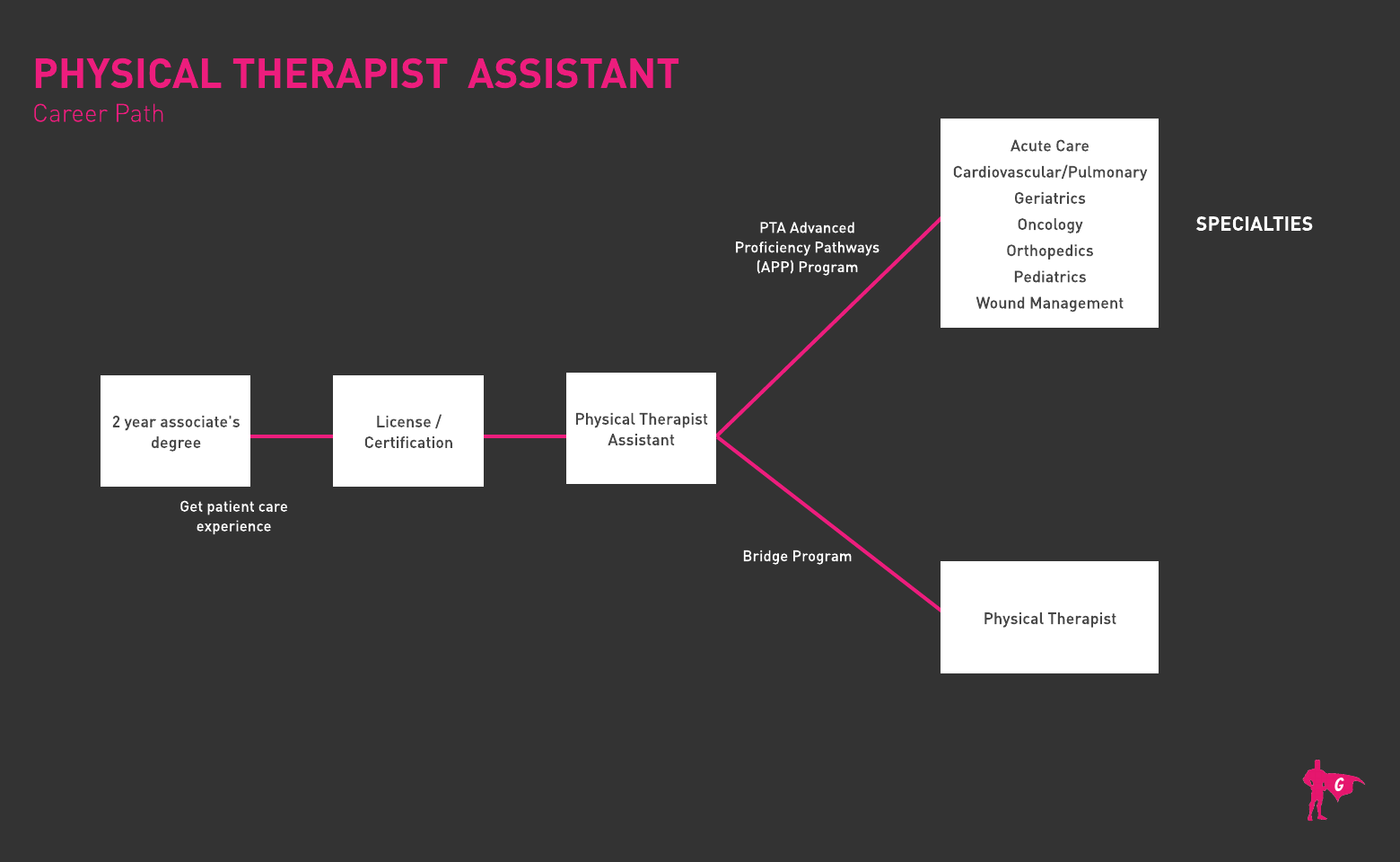
To become a Physical Therapist Assistant, you generally need to graduate from an associate degree program accredited by the Commission on Accreditation in Physical Therapy Education (CAPTE). These programs usually take about two years and are offered at community colleges and technical colleges. Admission is often competitive, and many programs require prerequisite courses in biology, anatomy, and math, along with observation hours in a physical therapy setting. Physical therapy aides and technicians, who set up equipment and help in the clinic, are different from PTAs. Aides do not provide skilled treatment and do not need the same degree or license.
After graduating, you take the National Physical Therapy Examination for Physical Therapist Assistants (NPTE-PTA), which is run by the Federation of State Boards of Physical Therapy (FSBPT). You also apply for a license or certification in the state where you plan to work. Requirements differ by state, so check your state's physical therapy licensing board. Many states also require a jurisprudence exam on state laws, a background check, and proof of CPR or basic life support. Each state also sets rules for how closely a physical therapist must supervise a PTA, and some states take part in the Physical Therapy Compact, which can make it easier to practice across state lines.
Students can take courses in relevant subjects such as:
- Human Anatomy and Physiology
- Kinesiology and Biomechanics
- Pathology and Common Conditions
- Therapeutic Exercise
- Physical Agents and Modalities
- Neuroscience and Neurological Rehabilitation
- Patient Care Skills and Safe Handling
- Medical Terminology
- Professional Ethics, Law, and Communication
- Pharmacology and Clinical Documentation
Hands-on experience makes up a major portion of PTA training. Programs include labs where students practice treatment techniques on classmates and then several clinical experiences, often in different settings, where students work with real patients under the supervision of a licensed PT or PTA. These clinical placements give students experience in outpatient clinics, hospitals, rehabilitation centers, or nursing facilities and are a major chance to impress future employers.
Learning does not end at graduation. PTAs complete continuing education to renew their licenses, and many seek additional recognition. The American Physical Therapy Association (APTA) offers voluntary PTA Advanced Proficiency Pathways in areas such as acute care, cardiovascular and pulmonary care, geriatrics, neurology, oncology, orthopedics, pediatrics, and wound management. Some PTAs also continue their education with a bachelor's degree or go on to become physical therapists through a doctoral program, including bridge programs designed for working PTAs.
- Take biology, anatomy, physiology, chemistry, and math to prepare for the science courses in a PTA program
- Join HOSA - Future Health Professionals or a health science or sports medicine club to explore the career and meet others who share your interests
- Ask a local physical therapy clinic, hospital, or school if you can shadow a PTA or PT, and spend time watching a variety of patients
- Volunteer at a rehab center, nursing home, hospital, or adaptive sports program to get comfortable working with people with disabilities and mobility challenges
- Stay active through sports, dance, yoga, weight training, or other exercise, so you build your own strength and understand movement
- Take a CPR and first aid course, and consider becoming a sports trainer's assistant or team manager
- Look up PTA programs near you early, since many have prerequisites, observation hour requirements, and limited seats
- Keep your grades strong in science courses, because admission to PTA programs is often competitive
- Check your state physical therapy board's website to learn what licensure rules apply, including supervision rules and exams
- Practice explaining things clearly and kindly by coaching younger kids, tutoring, or leading a club activity
- Develop good body habits by learning proper lifting form and building core and leg strength
- Talk with a school counselor about dual enrollment, health pathways, and the possibility of continuing on to a bachelor's or a physical therapy doctorate later
- Accreditation by CAPTE, which is required for you to sit for the licensing exam in all states
- High graduation rates, licensing exam pass rates, and employment rates, which CAPTE-accredited programs are expected to report publicly
- Clinical experiences in several settings, such as outpatient, acute care, rehabilitation, and skilled nursing, with good supervisors
- Well-equipped labs with modern treatment tables, exercise equipment, and assistive devices
- Faculty who are experienced PTs and PTAs and who care about mentoring students
- A clear plan for prerequisites, observation hours, and application deadlines
- Support for exam preparation, such as review sessions and practice tests
- Strong relationships with local clinics, hospitals, and rehabilitation centers that hire graduates
- Clear information about total costs, clinical placement travel, uniforms, background checks, and exam fees, with financial aid options
- Scheduling that fits your life, with a realistic picture of how demanding full-time clinical rotations will be
- Credits that can transfer toward a bachelor's degree, if you may want to continue your education
- An active student community, such as a PTA student association, to build leadership and networking skills
- Pass the NPTE-PTA and complete your state license application as soon as you graduate, since you cannot work as a PTA until you are licensed or certified
- Treat every clinical placement as a job interview by arriving early, learning names, asking questions, and taking on tasks
- Tell your clinical instructors you are interested in working there, and ask about openings before the placement ends
- Search for Physical Therapist Assistant, Rehab Assistant, and Therapy Assistant positions on general job boards, healthcare job sites, and employer career pages
- Try more than one setting, such as outpatient clinics, skilled nursing facilities, hospitals, and home health, since each can build different skills
- Create a clear resume that highlights your clinical experiences, patient populations, certifications, and skills in exercise instruction and documentation
- Build a professional LinkedIn profile and keep your social media professional
- Join the American Physical Therapy Association as a student or new graduate to access job boards, mentors, and events
- Ask your program's career services and instructors for introductions to local employers
- Prepare for interview questions about how you would motivate a discouraged patient, handle a patient in pain, respond to a fall, or communicate with a supervising PT
- Bring examples that show teamwork, reliability, and safe patient handling
- Be open to starting in a setting such as skilled nursing or home health, where there are often openings and strong learning opportunities
- Build a reputation for safe, kind, and effective treatment, and ask the supervising PT for feedback and guidance
- Earn APTA PTA Advanced Proficiency Pathway recognition in a specialty area, such as geriatrics, orthopedics, pediatrics, or acute care
- Take continuing education courses in areas such as balance and vestibular care, wound care, or pediatric development
- Move into lead PTA, clinical instructor, rehab supervisor, or program coordinator roles with the training of students and teams
- Teach in a PTA program or mentor students as a clinical instructor
- Add a bachelor's degree to open leadership, management, or education paths
- Consider a PTA-to-PT bridge program or a doctoral program in physical therapy if you want to become a physical therapist
- Stay active in professional groups and keep up with changes in state laws, payment rules, and research
Websites:
- American Physical Therapy Association (APTA) - apta.org
- Commission on Accreditation in Physical Therapy Education (CAPTE) - capteonline.org
- Federation of State Boards of Physical Therapy (FSBPT) - fsbpt.org
- Physical Therapy Compact - ptcompact.org
- ChoosePT, APTA's consumer information site for patients - choosept.com
- APTA Orthopedics - orthopt.org
- APTA Pediatrics - pediatricapta.org
- APTA Geriatrics (Academy of Geriatric Physical Therapy) - aptageriatrics.org
- National Strength and Conditioning Association (NSCA) - nsca.com
- American College of Sports Medicine (ACSM) - acsm.org
- Physiopedia - physio-pedia.com
- HOSA - Future Health Professionals - hosa.org
Books:
- Dreeben-Irimia's Introduction to Physical Therapy Practice for Physical Therapist Assistants by Christina M. Barrett
- Essentials of Kinesiology for the Physical Therapist Assistant by Paul Jackson Mansfield and Donald A. Neumann
- Therapeutic Exercise for Physical Therapist Assistants by William D. Bandy and Barbara Sanders
- Goodman and Fuller's Pathology for the Physical Therapist Assistant by Charlene Marshall
- Therapeutic Exercise: Foundations and Techniques by Carolyn Kisner, Lynn Allen Colby, and John Borstad
If you find that being a Physical Therapist Assistant isn't the right fit, your interest in movement, rehabilitation, and helping people recover can lead to many other rewarding careers.
- Physical Therapist
- Occupational Therapy Assistant
- Occupational Therapist
- Athletic Trainer
- Exercise Physiologist
- Massage Therapist
- Orthotist and Prosthetist
- Recreational Therapist
- Certified Nursing Assistant
- Registered Nurse
Newsfeed

Featured Jobs
Online Courses and Tools
Annual Salary Expectations
New workers start around $79K. Median pay is $91K per year. Highly experienced workers can earn around $99K.