






Spotlights
Physician Assistant (PA), Physician Associate, Certified Physician Assistant (PA-C), Emergency Medicine PA, Family Medicine PA, Surgical PA, Orthopaedic PA, Cardiology PA, Dermatology PA, Hospitalist PA, Pediatric PA, Advanced Practice Provider
It is two in the morning in a busy emergency department. A teenager has come in with a deep cut from a skateboard fall, a grandfather is short of breath, and a worried parent is holding a child with a fever that will not go down. The clinician who walks into each room, listens to the story, examines the patient, orders the tests, makes the diagnosis, and starts the treatment might very well be a Physician Assistant. PAs are licensed medical professionals who practice medicine as part of a healthcare team, and in clinics, hospitals, operating rooms, and rural towns across the country, they are often the person a patient sees first and trusts most.
Physician Assistants, also called Physician Associates in some places, examine patients, take medical histories, order and interpret tests, diagnose illnesses and injuries, develop treatment plans, perform procedures, and prescribe medications. They work in nearly every specialty, from family medicine and pediatrics to surgery, emergency medicine, cardiology, dermatology, and mental health. PAs work in partnership with physicians and other healthcare professionals, and the level of oversight depends on the state, the employer, and the PA's experience. Day to day, they might stitch a wound, set a broken bone, manage a patient's diabetes, assist in the operating room, or explain a new diagnosis to a worried family. Because they are trained as generalists in medicine, PAs can also move between specialties during their careers without starting over, which keeps their work interesting.
To do this work, PAs use stethoscopes, ultrasound, electronic health records, lab results, imaging, and a toolbox of procedure skills, along with strong clinical reasoning. They draw on years of intense training in anatomy, pharmacology, and clinical medicine, and on thousands of hours of hands-on experience in real clinics and hospitals. The role matters because there are never enough hands to care for everyone who needs it, and PAs help bring timely, high-quality care to more people, including communities that might otherwise go without. A great PA combines the curiosity of a scientist with the heart of a caregiver and the teamwork of a good coach.
- Diagnosing and treating real patients, and seeing the difference your care makes in their lives
- Having the flexibility to switch specialties during your career, from emergency medicine to dermatology or surgery, without going back to school for years of additional training
- Working as part of a close team of physicians, nurses, and other professionals, with the autonomy to make medical decisions
- Building a career with strong demand across many settings, locations, and schedules, including options for part-time and flexible work
Working Schedule
Physician Assistants usually work full-time, and the hours depend heavily on the specialty and setting. PAs in outpatient clinics, such as family medicine, dermatology, or pediatrics, often work regular daytime hours with occasional evenings or weekends. PAs in hospitals, emergency departments, and urgent care centers may work 8-, 10-, or 12-hour shifts that include nights, weekends, and holidays, and many work a block of shifts followed by several days off. Surgical PAs may start early in the morning, spend long stretches in the operating room, and follow patients on hospital floors after surgery. Some PAs take call for emergencies, and rural PAs may be one of just a few clinicians in town. PAs spend much of the day on their feet, moving from room to room, standing for procedures, and sometimes helping lift or position patients. Many employers offer part-time schedules, job sharing, or per-diem shifts, which gives PAs more control over their time.
Typical Duties
- Taking a patient's medical history and performing a physical exam
- Ordering and interpreting lab tests, X-rays, and other diagnostic studies
- Diagnosing illnesses and injuries and developing treatment plans
- Prescribing medications, within the limits of state law and the practice setting
- Performing procedures such as suturing wounds, setting fractures, draining abscesses, and giving injections
- Assisting in surgery by helping with exposure, suturing, and closing incisions, and following patients before and after the operation
- Educating patients and families about conditions, medications, and ways to stay healthy
- Managing chronic conditions such as diabetes, asthma, high blood pressure, and depression over time
- Counseling patients on prevention, including vaccines, screenings, nutrition, and lifestyle changes
- Rounding on hospitalized patients, writing orders, and coordinating care with nurses, specialists, and case managers
- Consulting with physicians on complex cases and referring patients to specialists when needed
- Documenting visits in electronic health records accurately and on time
Additional Responsibilities
- Assessing and recording a patient's progress and changing the treatment plan as needed
- Leading or joining community outreach programs, such as health fairs, school screenings, and vaccination drives
- Teaching and precepting PA students, medical students, and new colleagues
- Keeping up with the latest research and clinical guidelines to maintain high-quality patient care
- Serving on hospital committees or helping to improve clinic workflows and patient safety
- Completing continuing education and recertification activities to maintain national certification
- Taking part in research or quality improvement projects, and sometimes helping manage a clinic or lead other advanced practice providers
Consider an emergency medicine PA starting a day shift at seven o'clock. The PA begins with a handoff from the overnight team, hearing about patients who are still waiting for test results, a patient awaiting admission to the hospital, and one who needs a repeat exam. Then the new patients start arriving. The first is a child who fell off a bike and may have a broken wrist. The PA examines the arm, orders an X-ray, and explains to the child and parent what is happening. While waiting for the image, the PA sees an older adult with chest pain, orders an electrocardiogram and blood tests, and brings the physician in right away to help manage the case.
Midday is a rotation between rooms and quick decisions. The X-ray confirms the child's wrist is broken, so the PA numbs the area, sets the bone, applies a splint, and writes instructions for follow-up with an orthopedic specialist. Another patient needs stitches, and the PA cleans the wound and sews it closed with tiny, neat stitches. Between these patients, the PA reviews lab results, adjusts treatment plans, calls a specialist to arrange a consult, and documents every step in the electronic health record. A PA in a different setting, such as a dermatology clinic or surgery team, would have a very different day, but the pattern is similar: a steady stream of patients, quick thinking, hands-on care, and teamwork.
Afternoon brings a steady mix of new patients and follow-ups, and the PA stays alert for surprises. A student asks questions during a case and the PA uses it as a teaching moment. A patient who has recovered after treatment is ready to go home, and the PA explains the discharge plan, makes sure the medicines are clear, and checks that the patient knows when to return. At the end of the shift, the PA hands off remaining patients to the evening team, finishes charts, and leaves knowing that dozens of people got the care they needed during their worst moments.
Soft Skills
- Clear, compassionate communication with patients, families, and colleagues, especially in stressful situations
- Active listening, since the patient's story often holds the key to the diagnosis
- Critical thinking and clinical reasoning to analyze symptoms, test results, and risks
- Teamwork and respect for every member of the healthcare team, from medical assistants to surgeons
- Composure and quick decision making in emergencies
- Empathy and cultural humility with people from many backgrounds and life situations
- Curiosity and a lifelong learning mindset, since medicine changes constantly
- Dependability, strong work ethic, and ownership of your patients' care
- Humility to know your limits, ask for help, and consult colleagues
- Time management and organization when juggling many patients at once
- Resilience and emotional balance when facing difficult outcomes
- Leadership and adaptability when roles, teams, and technology change
Technical Skills
- Strong foundation in anatomy, physiology, pathology, and pharmacology
- Taking medical histories and performing thorough physical examinations
- Ordering and interpreting lab tests, imaging, and electrocardiograms
- Diagnosing conditions and creating evidence-based treatment plans
- Procedural skills such as suturing, splinting, joint injections, and wound care
- Prescribing medications safely, including understanding doses and interactions
- Using electronic health records, order entry systems, and telehealth platforms
- Understanding of medical ethics, patient privacy, and medical law
- Reading and applying research and clinical guidelines
- Specialty skills such as first-assisting in surgery, point-of-care ultrasound, or managing ventilators and critical care patients
- Primary Care PA: Provides checkups, manages ongoing conditions, and treats everyday illnesses in family medicine, internal medicine, or pediatric practices
- Emergency Medicine PA: Evaluates and treats a wide range of urgent illnesses and injuries in emergency departments and urgent care centers
- Surgical PA: Assists surgeons in the operating room and manages care before and after surgery in fields such as orthopaedics, cardiothoracic surgery, neurosurgery, and general surgery
- Hospital Medicine PA: Cares for patients who are admitted to the hospital, coordinating tests, treatments, and discharge plans
- Dermatology PA: Diagnoses and treats skin conditions and performs procedures such as biopsies and skin cancer removal
- Behavioral Health PA: Evaluates and treats patients with mental health and substance use conditions, often in teams with therapists and psychiatrists
- Specialty Clinic PA: Works in fields such as cardiology, oncology, neurology, or nephrology, managing patients with complex conditions
- Rural and Community Health PA: Provides broad care in small towns, community health centers, and underserved areas where PAs may be the main clinicians
- Physician offices and group practices
- Community and university hospitals
- Emergency departments and urgent care centers
- Outpatient surgery and specialty clinics
- Community health centers and rural health clinics
- Veterans Affairs hospitals and military medical facilities
- Indian Health Service and other federal health programs
- Correctional healthcare facilities
- Nursing homes and long-term care facilities
- Schools, colleges, and university student health centers
- Telehealth companies and health technology firms
- PA programs, medical schools, and research institutions
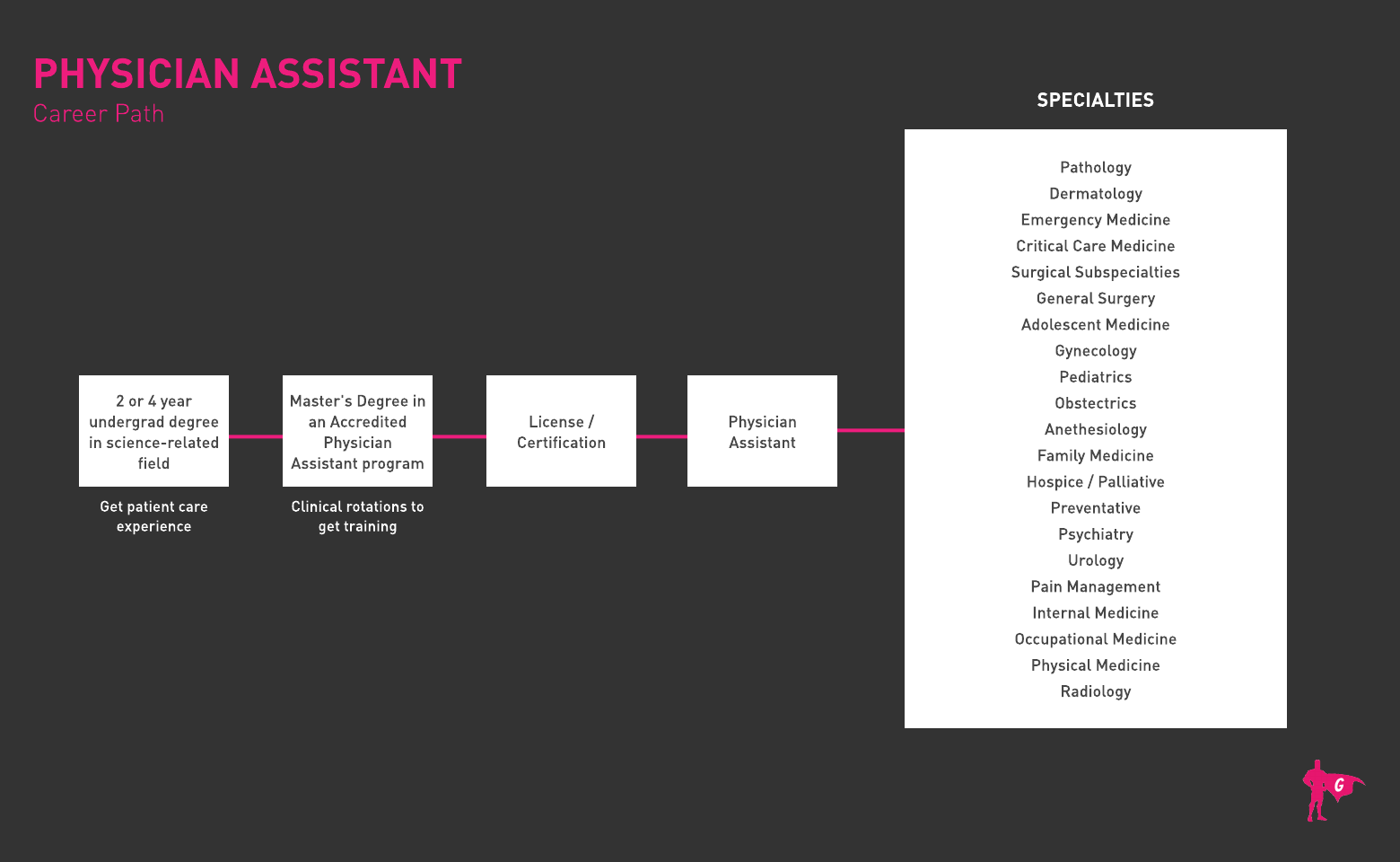
Becoming a Physician Assistant takes a significant commitment. Most PA students first earn a bachelor's degree, then gain hundreds or even thousands of hours of hands-on patient care experience, and then complete a rigorous master's-level PA program that typically lasts about two years. Programs are intense, with long days of lectures and labs followed by a full year of clinical rotations. Tuition for PA school is substantial, and many graduates have student loans. The application process is competitive, so most students spend several years preparing, and it can take time and persistence to get accepted.
Once practicing, PAs carry real responsibility for patients' health. They make decisions that affect lives, and some days include heartbreak, such as telling a family bad news or caring for a patient who does not recover. Hospital and emergency PAs often work nights, weekends, and holidays, and the pace can be fast and exhausting. PAs also spend a lot of time on documentation and insurance paperwork, which can feel like a burden. The details of PA practice vary by state, and in some places PAs must have a formal agreement with a supervising or collaborating physician, so it is important to learn the rules where you plan to work.
At the same time, many PAs say the career offers an excellent balance of challenge, teamwork, and flexibility. You can change specialties, work part-time, and choose settings that fit your life, including rural, urban, and international opportunities. The PAs who thrive are curious, humble, steady in a crisis, and truly interested in people. They accept that they will keep learning for the rest of their careers, and they find meaning in being the clinician who is there when someone needs help.
- PAs are practicing in more specialties and settings than ever, and the profession is expanding to meet demand for care in primary care, mental health, and rural communities
- Many states are updating their laws to give PAs more flexibility, replacing strict supervision requirements with collaboration agreements, and some now use the title physician associate
- A PA licensure compact is being adopted by a growing number of states to make it easier for PAs to practice across state lines
- Telehealth lets PAs see patients by video, consult with specialists, and reach people in remote areas
- Artificial intelligence tools, such as ambient note-taking and decision support, are helping reduce paperwork and flag possible diagnoses, though PAs make the final decisions
- More PAs are completing postgraduate residency programs or fellowships in specialties such as emergency medicine, surgery, and critical care
- Team-based care is growing, with PAs, nurse practitioners, physicians, pharmacists, and others sharing responsibility for patients
- Point-of-care ultrasound and other portable technology allow PAs to make faster diagnoses at the bedside
- There is a stronger focus on health equity, cultural competence, and care for underserved communities
- Conversations about burnout, staffing, and paperwork are leading employers to improve schedules, support teams, and patient-friendly workflows
Many Physician Assistants were kids who loved helping people. They were the ones who looked after friends who got hurt on the playground, volunteered at hospitals or community events, or took care of younger siblings and grandparents. They were curious about health and how the body works, enjoyed science and math classes, and liked talking with people from many backgrounds. Many were the first to ask why something happened and to keep digging until they understood.
Others discovered the career later, through a job as an EMT, a nursing assistant, or a medical assistant, or after a personal experience with a caring PA who made them feel heard. Many enjoyed team sports, clubs, or other group activities, and learned early how to work well with others. They were usually reliable, patient, and calm in a crisis, with a mix of curiosity and compassion that suits a career in medicine.
"I think what drives anyone in medicine is an interest in science and helping people. In emergency medicine you are seeing people on one of the worst days of their lives and the ability to think quickly and act compassionately is key. People in medicine tend to be curious people who like to ask questions and dig deeper into a problem, as medicine is all about fixing what we can." Cyndy Flores, Senior Director Advanced Providers, Vituity
Physician Assistants complete a master's-level PA program accredited by the Accreditation Review Commission on Education for the Physician Assistant (ARC-PA). Most programs last about two years, or roughly 24 to 27 months, and award a master's degree. The first part of the program is classroom and lab learning in subjects such as anatomy, physiology, pharmacology, pathophysiology, clinical medicine, physical diagnosis, and medical ethics. The second part is a year or more of supervised clinical rotations, where students work with real patients in settings such as family medicine, internal medicine, emergency medicine, pediatrics, surgery, women's health, and behavioral health.
Before applying, students earn a bachelor's degree, and the major can be almost anything as long as the prerequisites are done. Those usually include anatomy, physiology, microbiology, general chemistry, organic chemistry or biochemistry, statistics, and psychology, and requirements vary by program. Nearly all programs also ask for direct patient care experience, which means hands-on work with patients, often as an EMT, certified nursing assistant, medical assistant, phlebotomist, nurse, paramedic, or similar role. The number of hours differs a lot from one program to another, from a few hundred to a couple of thousand, and some programs prefer paid experience. Most applicants apply through a centralized system called CASPA, which is run by the Physician Assistant Education Association, and some programs also want the GRE, shadowing hours, and letters of recommendation.
After graduation, PAs must pass the Physician Assistant National Certifying Examination (PANCE) from the National Commission on Certification of Physician Assistants (NCCPA). The PANCE is a computer-based exam of 300 multiple-choice questions given in five blocks. Passing it earns the credential PA-C, which stands for Physician Assistant-Certified, and graduates then apply for a license from the state where they will work. Every state has its own rules about licensure, practice agreements, and what PAs can do, so it is important to look up the requirements where you plan to practice. To keep their certification, PAs must complete continuing medical education every two years and stay certified over a ten-year cycle by passing a recertification exam, either the traditional PANRE or the newer longitudinal assessment known as PANRE-LA, which uses short sets of questions taken over time. PAs can also earn Certificates of Added Qualifications in specialties like emergency medicine, psychiatry, pediatrics, cardiovascular and thoracic surgery, hospital medicine, nephrology, and orthopaedic surgery, and some complete postgraduate PA residencies.
Students can take courses in relevant subjects such as:
- General Biology
- Human Anatomy and Physiology
- Microbiology
- General Chemistry
- Organic Chemistry or Biochemistry
- Statistics
- Psychology and Human Development
- Medical Terminology
- Genetics
- Spanish or another second language
Hands-on experience is the heart of preparing for PA school. Many students work as EMTs, nursing assistants, medical assistants, scribes, or phlebotomists while finishing college, and others take a gap year or two to build patient care hours. Shadowing PAs, volunteering in healthcare settings, and joining pre-PA clubs also help applicants understand the work and show their commitment. Within the PA program, rotations give students the chance to try many specialties, and clinical sites often become the place where graduates find jobs.
Learning never stops. PAs complete continuing education, keep up with new medications and guidelines, and maintain their national certification and state license throughout their careers.
- Take challenging science and math courses in high school, including biology, chemistry, anatomy and physiology, and statistics, and work on strong study habits
- Join HOSA or a health science club, and take any available courses in medical terminology or health careers
- Earn a CPR or first aid certification, and consider EMT training if it is offered in your area
- Shadow a Physician Assistant, or several in different specialties, to see what the day-to-day job is like
- Volunteer in healthcare settings, such as hospitals, nursing homes, community clinics, or health fairs, to practice serving people
- Ask the pre-health advisor at your college how to plan the required prerequisites and which majors fit your goals
- Look at the requirements of a few PA programs early, since prerequisites, patient care hours, and the GRE differ from program to program
- Plan to build patient care experience through a job such as EMT, certified nursing assistant, medical assistant, or phlebotomist, and track your hours carefully
- Maintain strong grades, especially in science courses, since PA schools are competitive
- Join a pre-PA club or a student chapter of a professional organization, and take on leadership roles to practice teamwork and communication
- Learn a second language, especially Spanish, to help you care for more patients
"Obviously, take science courses and study. Volunteer! Volunteer at hospitals, nursing homes, health fairs, homeless shelters or maybe medical missions. Most of these do not require any medical knowledge, but they are places that need help and there is a place for everyone. Another great idea is to join “pre-PA” groups to continue to learn about the profession and if you find the opportunity shadow a PA (or more) while they are working to get a better understanding of what the role is all about." Cyndy Flores, Senior Director Advanced Providers, Vituity
- Accreditation by the Accreditation Review Commission on Education for the Physician Assistant, which is required to take the PANCE and be licensed
- Strong first-time pass rates on the PANCE and a track record of graduates who find jobs
- High-quality clinical rotation sites, ideally arranged by the program rather than something you must find yourself
- A variety of rotations in primary care, emergency medicine, surgery, behavioral health, and other fields
- Experienced faculty, including practicing PAs and physicians, who offer mentorship and support
- Realistic prerequisites and patient care hour requirements that you can meet, along with clear admission information
- Modern simulation labs and training in procedures such as suturing, splinting, and ultrasound
- Opportunities to learn alongside medical, nursing, and pharmacy students
- Program length, cost, and available scholarships and loan repayment programs, including those for rural or underserved service
- Attrition rates and student support, such as tutoring, counseling, and wellness resources
- Postgraduate residency options and strong connections with regional employers
- A location where you would like to live and a licensing environment that fits where you want to practice
- Use your clinical rotations to build relationships, since preceptors and clinic staff often become references or even employers
- Pass the PANCE and complete the state licensing process, since employers need your PA-C credential and license before you can start
- Decide what kind of work you want, such as primary care, emergency medicine, surgery, or a specialty, and look for employers that offer training for new graduates
- Consider a postgraduate PA residency, which offers structured training for new PAs in specialties such as emergency medicine, critical care, and surgery
- Search for jobs on hospital and health system career pages, the job board of the American Academy of Physician Associates, state PA organizations, and general sites such as Indeed and LinkedIn
- Create a polished resume and a professional LinkedIn profile, highlighting your clinical hours, rotations, procedures, and teamwork
- Network by joining professional organizations, attending conferences or local chapter events, and keeping in touch with preceptors and classmates
- Ask thoughtful questions about onboarding, mentorship, the physician or collaborating clinician you will work with, patient volume, call, and scheduling
- Learn the supervision or collaboration rules in your state and ask employers how they are handled in their practice
- Be open to different locations and settings, since rural and underserved areas often offer strong support and sometimes loan repayment programs
- Practice for interviews with mock sessions and prepare examples that show how you handle a difficult patient, a mistake, or a busy day
"The great thing about PA work….is there are more jobs than PAs out there! It is one of the fastest-growing healthcare jobs in the US, so finding a job isn’t usually difficult. Don’t worry if it isn’t your dream job, that will come. I tell people though, get a job that feels right, you are looking for your work family and unlike your regular family you can choose your work family." Cyndy Flores, Senior Director Advanced Providers, Vituity
- Build a reputation for good clinical judgment, reliability, and kindness, since colleagues and patients trust PAs who show those qualities
- Take on more complex patients as you gain experience, and ask for feedback from supervising or collaborating physicians and peers
- Earn extra credentials, such as a Certificate of Added Qualifications from NCCPA, to show expertise in a specialty
- Change specialties if you want a new challenge, using your broad medical training to move into fields like emergency medicine, surgery, or dermatology
- Move into leadership roles such as lead PA, chief PA, or director of advanced practice providers, where you manage schedules, hiring, and quality
- Teach and mentor PA students and new graduates, or join the faculty of a PA program
- Get involved in state and national PA organizations, which can lead to policy, advocacy, and committee roles
- Keep learning through conferences, research, and quality improvement projects, and consider pursuing a doctoral degree or an advanced degree in public health, business, or education
Websites:
- American Academy of Physician Associates (AAPA) - aapa.org
- National Commission on Certification of Physician Assistants (NCCPA) - nccpa.net
- Accreditation Review Commission on Education for the Physician Assistant (ARC-PA) - arc-pa.org
- Physician Assistant Education Association (PAEA) - paeaonline.org
- Association of Postgraduate Physician Assistant Programs (APPAP) - appap.org
- PA Licensure Compact - pacompact.org
- The PA Platform - thepaplatform.com
- The PA Life - thepalife.com
- ExploreHealthCareers.org - explorehealthcareers.org
- HOSA - Future Health Professionals - hosa.org
- Student Doctor Network - studentdoctor.net
Books:
- Ballweg's Physician Assistant: A Guide to Clinical Practice by Tamara S. Ritsema, Darwin L. Brown, and Daniel T. Vetrosky
- Physician Assistant School Personal Statement Guide: Tips, Tricks, and Techniques to Write Your PA School Essay by Savanna Perry
- How Doctors Think by Jerome Groopman
- Being Mortal: Medicine and What Matters in the End by Atul Gawande
- Gray's Anatomy for Students by Richard L. Drake, A. Wayne Vogl, and Adam W. M. Mitchell
If you find that being a Physician Assistant isn't the right fit, your interest in medicine and caring for patients can lead to many other rewarding careers.
- Nurse Practitioner
- Registered Nurse
- Physician
- Paramedic
- Respiratory Therapist
- Physical Therapist
- Pharmacist
- Clinical Research Coordinator
- Health Educator
- Healthcare Administrator
Newsfeed

Featured Jobs
Online Courses and Tools
Annual Salary Expectations
New workers start around $129K. Median pay is $152K per year. Highly experienced workers can earn around $181K.