




Spotlights
Garden Blogger, Plant Enthusiast Writer, Botanical Content Creator, Horticulture Blogger, Urban Gardening Blogger, Indoor Plant Blogger, Sustainable Gardening Blogger, Plant Care Influencer, Botanical Storyteller, Green Thumb Blogger, Plant Lifestyle Blogger, Eco Gardening Blogger
Imagine scrolling through a vibrant blog filled with stunning photos of lush greenery, helpful tips for keeping your houseplants thriving, and inspiring stories about urban gardens. Plant Bloggers bring the beauty and science of plants to life for readers around the world, sparking a love for nature and green living.
Plant Bloggers spend their days researching various plant species, writing engaging articles or posts, and capturing eye-catching photographs or videos. They collaborate with horticulturists, photographers, social media managers, and sometimes brands to create content that informs and inspires. Their work often includes answering reader questions, reviewing gardening products, and sharing personal experiences about plant care.
They use blogging platforms like WordPress or Squarespace, photo and video editing tools, and social media channels to reach their audience. This role is important because it helps people connect with plants, learn sustainable gardening habits, and create greener spaces—both indoors and outdoors—improving wellbeing and the environment.
- Sharing your passion for plants and helping others grow their own green spaces feels deeply rewarding.
- Creating a community of plant lovers who support and inspire each other.
- Seeing your blog grow and influence people’s habits toward sustainability and nature appreciation.
- Combining creativity with science to educate and entertain through storytelling and visuals.
Working Schedule
Plant Bloggers often set their own flexible schedules since much of their work is independent and online. They may work from home or any green space they love. Deadlines come with content calendars or sponsored posts, requiring good time management. The role can be freelance or part of a larger media or horticulture company, and hours can vary based on projects and audience engagement demands.
Typical Duties
- Researching plant species, gardening techniques, and environmental topics to provide accurate information.
- Writing, editing, and publishing blog posts or articles regularly.
- Taking or sourcing high-quality photographs and videos of plants and gardens.
- Engaging with readers through comments, emails, and social media platforms.
- Collaborating with horticulturists, photographers, and marketing teams to enhance content quality.
- Reviewing and testing gardening products or tools for honest blog recommendations.
- Managing social media accounts to promote blog content and grow the audience.
- Analyzing website traffic and reader feedback to improve content strategy.
- Optimizing blog posts for search engines (SEO) to increase visibility.
- Staying updated on plant trends, gardening news, and digital marketing techniques.
- Planning content calendars to maintain consistent posting schedules.
- Handling sponsorships and partnerships with plant-related brands or organizations.
Additional Responsibilities
- Maintaining and updating older posts to keep information current and relevant.
- Participating in community forums or plant-related events to expand network and knowledge.
- Creating newsletters or email campaigns to keep followers engaged.
- Monitoring and responding to reader questions or concerns promptly.
- Negotiating contracts or sponsored content agreements with brands.
- Learning new digital tools and blogging trends to improve content delivery.
- Attending workshops, webinars, or conferences related to gardening, blogging, or digital marketing.
- Collaborating on guest posts or joint projects with other bloggers or experts.
Morning often starts with reviewing the day’s plan, checking reader comments or emails, and engaging on social media platforms to connect with the audience.
Midday is typically spent researching upcoming blog topics, writing posts, or editing photos and videos. This time may also include coordinating with collaborators or brands for sponsored content.
Afternoons or evenings might involve publishing new content, optimizing blog SEO, and scheduling posts. Many Plant Bloggers also spend this time attending virtual events, brainstorming ideas, or updating older content to keep the blog fresh and accurate.
Soft Skills
- Creativity
- Curiosity and passion for plants
- Strong written and verbal communication
- Patience and attention to detail
- Self-motivation and discipline
- Empathy to understand readers’ needs
- Adaptability to changing trends
- Networking and collaboration
- Problem-solving
- Time management
- Critical thinking
- Marketing and audience engagement awareness
Technical Skills
- Blogging platforms (WordPress, Squarespace)
- Photography and photo editing (Lightroom, Photoshop)
- Video recording and editing (iMovie, Adobe Premiere)
- Social media management tools (Hootsuite, Buffer)
- Search engine optimization (SEO) basics
- Content management systems
- Basic HTML/CSS for blog customization
- Email marketing platforms (Mailchimp)
- Analytics tools (Google Analytics)
- Graphic design basics (Canva)
- Indoor Plant Blogger: Focuses on caring for and styling houseplants.
- Urban Gardening Blogger: Specializes in gardening in small city spaces or balconies.
- Sustainable Gardening Blogger: Promotes eco-friendly and organic gardening practices.
- Botanical Science Blogger: Writes about plant biology and research for enthusiasts.
- Plant Care Influencer: Combines blogging with strong social media presence to educate followers.
- Floral Design Blogger: Focuses on flower arranging and decorative plant use.
- Edible Gardening Blogger: Shares tips on growing fruits, vegetables, and herbs.
- Plant Lifestyle Blogger: Integrates plants into home decor, wellness, and daily living.
- Media companies with gardening or lifestyle websites
- Horticulture and botanical gardens
- Plant nurseries and garden centers
- Sustainable agriculture nonprofits
- Educational institutions with agriculture departments
- Online influencers and content creator networks
- Publishing companies for gardening magazines
- Eco-friendly product brands
- Urban farming organizations
- Community gardening initiatives
- Marketing agencies specializing in green products
- Environmental advocacy groups
Plant Bloggers often face pressure to produce fresh, engaging content regularly to maintain and grow their audience. Deadlines for sponsored posts or collaborations can add time-sensitive demands, requiring good organization and stress management.
Work hours are flexible but can be irregular, especially during gardening seasons or popular plant trends. Some bloggers may work evenings or weekends to respond to followers or attend events. Balancing content creation with community engagement is key but can be demanding.
Sacrifices include managing the uncertainty of freelance income, staying updated on ever-changing digital tools and gardening trends, and handling occasional negative feedback online. However, passion for plants and connecting with others helps many sustain their motivation.
- Rise of indoor plants boosting content demand
- Growing interest in sustainable and organic gardening
- Use of video content and live streaming to engage audiences
- Integration of e-commerce with blogs for plant sales
- Social media platforms shaping content style and reach
- Increased collaboration between bloggers and plant brands
- Use of analytics to tailor content and improve SEO
- Mobile-friendly and visually rich website design
- Focus on mental health benefits of gardening
- Virtual gardening workshops and community building
Many Plant Bloggers loved spending time outdoors as kids, fascinated by flowers, trees, and insects. They enjoyed gardening with family or exploring nature, sparking a lifelong curiosity about plants and how they grow.
They often showed early interest in writing or photography, combining these skills with their passion for plants. Whether tending to a small garden or journaling about nature, these early experiences laid the foundation for their future blogging careers.
To become a Plant Blogger, formal education isn’t always required, but many find that studying horticulture, journalism, communications, or digital media helps build essential knowledge and skills. Combining plant science with writing and digital marketing training can make your content credible and appealing.
Students can take courses in relevant subjects such as:
- Botany and Plant Science
- Creative Writing or Journalism
- Digital Photography
- Social Media Marketing
- Environmental Science
- Graphic Design
- Video Production and Editing
- Search Engine Optimization (SEO)
- Web Design and Development
- Public Speaking and Communication
Hands-on experience is crucial in this career. Starting your own blog or contributing to gardening websites builds your portfolio and teaches you about audience engagement. Internships with botanical gardens, nurseries, or media companies provide practical insights. Continuous learning about plants and digital tools keeps your content fresh and relevant.
- Join school gardening clubs or science classes focused on plants and ecology.
- Take art or photography classes to develop visual storytelling skills.
- Learn computer skills and digital media tools early on.
- Write for your school newspaper or start a blog to practice writing regularly.
- Volunteer at botanical gardens or community gardens to gain hands-on experience.
- Attend workshops or summer camps about horticulture or environmental science.
- Explore internships or mentorships with local gardeners or bloggers.
- Build a social media presence around your plant interests.
- Study marketing or business basics to understand audience growth.
- Participate in online forums or groups dedicated to gardening and plants.
- Choose programs that offer a blend of plant science and communication skills.
- Look for courses with practical components like photography or video creation.
- Select schools with strong digital media or journalism departments.
- Seek programs that provide internships or connections to horticulture organizations.
- Ensure the curriculum includes training on social media and SEO.
- Pick classes that encourage creativity and storytelling.
- Find opportunities to collaborate on group projects or blogs.
- Opt for programs that support portfolio development.
- Look for mentorship opportunities with experienced bloggers or horticulturists.
- Choose schools that promote environmental sustainability education.
- Consider the availability of workshops or seminars on digital trends.
- Verify access to modern digital tools and software for content creation.
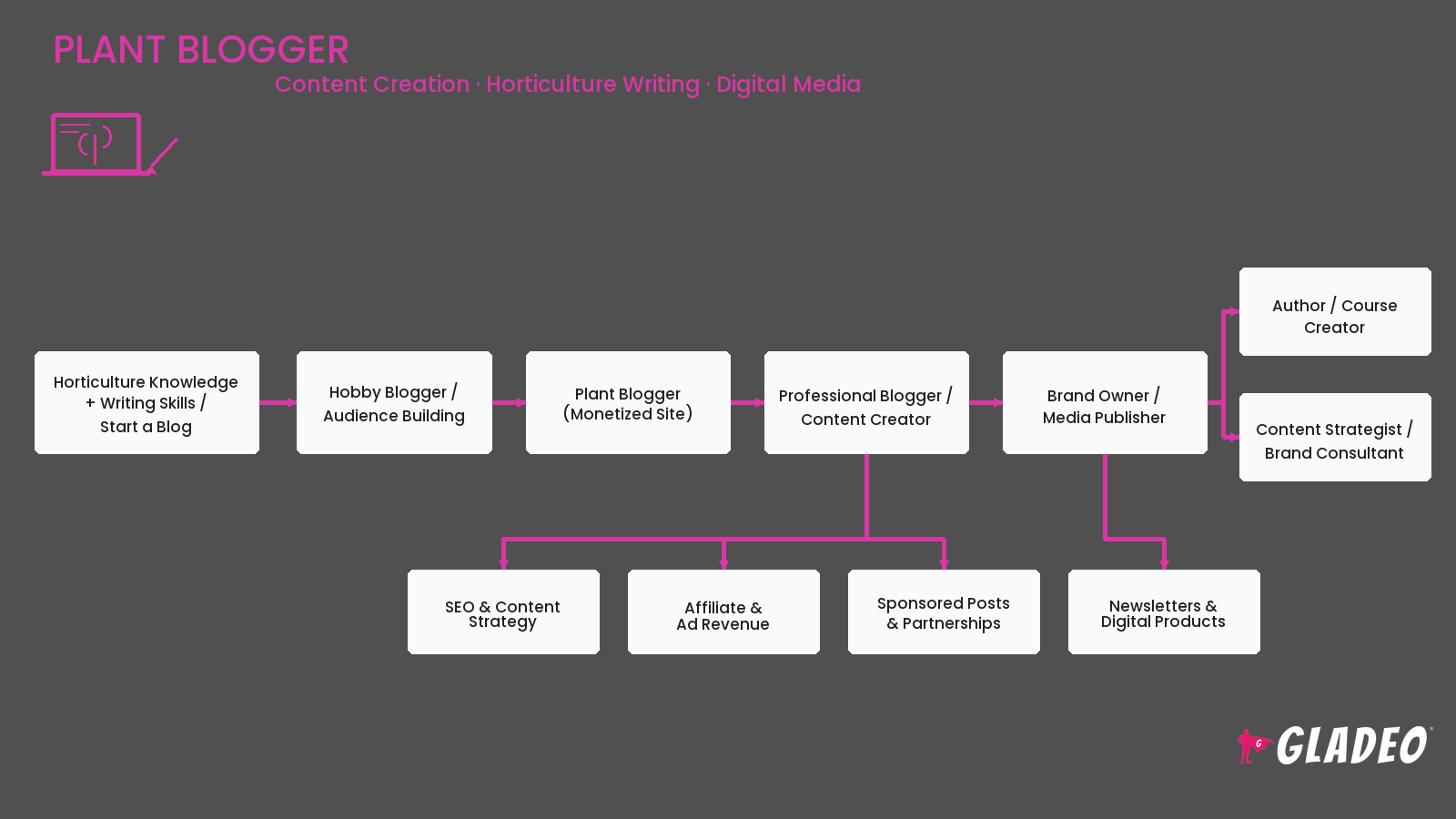
- Start a personal blog focusing on plants and gardening.
- Contribute guest posts to established gardening or lifestyle blogs.
- Intern at botanical gardens or nurseries to gain plant knowledge.
- Assist in social media management for horticulture organizations.
- Create and share plant care videos on platforms like YouTube or TikTok.
- Volunteer to write newsletters for gardening clubs or nonprofits.
- Build a portfolio of photography showcasing plants and gardens.
- Network with local gardeners and bloggers through events and online groups.
- Learn basic web design to customize your blog site.
- Seek freelance writing opportunities about plants or sustainability.
- Engage actively in online plant communities to build your audience.
- Attend webinars and workshops on blogging and digital marketing.
- Master content creation skills including writing, photography, and video.
- Develop expertise in SEO and social media marketing to grow your platform.
- Build relationships with brands, horticulturists, and other influencers.
- Expand your audience through diverse content formats like podcasts or newsletters.
- Negotiate sponsorships and monetize your blog effectively.
- Pursue certifications or advanced courses in horticulture or digital media.
- Collaborate on larger projects such as books or documentaries.
- Stay current with industry trends and continuously adapt your content strategy.
Websites:
- American Horticultural Society (ahsgardening.org)
- Garden Media Group (gardenmediagroup.com)
- National Gardening Association (garden.org)
- Botanical Society of America (botany.org)
- BloggingPro (bloggingpro.com)
- ProBlogger (problogger.com)
- The Spruce (thespruce.com)
- Pinterest for Plants (pinterest.com)
- Instagram for Gardeners (instagram.com)
- YouTube Creators (youtube.com/creators)
- SEO Journal (seojournal.com)
- Canva Design School (designschool.canva.com)
- Hootsuite Blog (blog.hootsuite.com)
- Mailchimp Resources (mailchimp.com/resources)
Books:
- Plant Parenting by Leslie F. Halleck
- The Well-Tended Perennial Garden by Tracy DiSabato-Aust
- The Flower Gardener's Bible by Lewis and Nancy Hill
- How to Blog for Profit by Ruth Soukup
- Content Inc. by Joe Pulizzi
If becoming a Plant Blogger isn’t the right fit or you want other options, there are many related careers that blend plant knowledge, writing, and digital skills.
- Horticulturist
- Garden Designer
- Social Media Manager
- Environmental Educator
- Landscape Photographer
- Content Marketing Specialist
- Botanical Illustrator
- Agricultural Writer
- Urban Farmer
- Park Naturalist
Click here to download the infographic
Newsfeed

Featured Jobs
Online Courses and Tools