





Spotlights
Plant Geneticist, Crop Scientist, Agricultural Geneticist, Plant Improvement Specialist, Plant Genetic Breeder, Horticultural Breeder, Seed Developer, Plant Researcher, Crop Breeder, Agricultural Scientist, Plant Hybridizer, Plant Biotechnology Specialist
Every time you bite into a juicy tomato or enjoy a hearty loaf of bread, you’re experiencing the results of a Plant Breeder’s work. These innovators develop new plant varieties that are tastier, more nutritious, and resilient against pests and climate challenges—impacting food security and our environment worldwide.
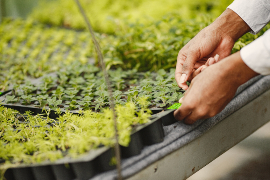
Plant Breeders spend their days experimenting with plant genetics, cross-breeding different species or varieties, and conducting field trials to test new traits. They collaborate closely with geneticists, farmers, agronomists, and laboratory technicians to create plants that grow better, yield more, or resist diseases. Their work results in improved crops that support farmers and feed communities.
Using advanced tools like gene sequencing, hybridization techniques, and data analysis software, Plant Breeders unlock the secrets of plant DNA to design better crops. Their role is vital for sustainable agriculture, helping adapt plants to changing climates, reduce pesticide use, and meet the growing demand for food worldwide.
- Seeing new plant varieties thrive in fields and gardens, knowing your work supports global food security.
- Contributing to sustainable farming by developing crops that need less water, fertilizer, or pesticides.
- Collaborating with scientists, farmers, and communities to solve real-world agricultural challenges.
- Watching farmers and consumers benefit from healthier, more resilient crops you helped create.
Working Schedule
Plant Breeders usually work full-time, often spending time both indoors in labs and outdoors in fields or greenhouses. Their schedules can be seasonal, intensifying during planting and harvest periods or when monitoring crops for growth and disease. Many work for agricultural companies, universities, or government agencies, with some working as consultants or in research roles that may require travel to test sites or conferences.
Typical Duties
- Design and conduct plant breeding experiments to develop new crop varieties.
- Cross-pollinate plants to combine desirable traits like drought resistance or higher yield.
- Analyze genetic data to select plants with the best characteristics for breeding.
- Conduct field trials to observe plant growth, disease resistance, and environmental adaptability.
- Collaborate with biotechnologists and geneticists to incorporate modern genetic techniques.
- Maintain detailed records of breeding experiments and results for future reference.
- Evaluate plant traits such as size, taste, nutritional value, and shelf life.
- Develop strategies to protect new plant varieties through patents or plant variety rights.
- Communicate findings through reports, presentations, and scientific publications.
- Stay updated on agricultural trends, pests, and climate conditions affecting crop performance.
- Work with farmers to understand their needs and test plant varieties under real-world conditions.
- Assist in seed production, quality control, and distribution efforts.
Additional Responsibilities
- Train junior researchers or interns in breeding techniques and lab procedures.
- Manage greenhouse or field trial sites, ensuring proper conditions and data collection.
- Apply for research grants and funding to support breeding projects.
- Participate in conferences and workshops to share research and learn new methods.
- Advocate for sustainable agricultural practices and new crop adoption among stakeholders.
- Develop educational materials for farmers and agricultural extension agents.
- Assist regulatory bodies with approvals for new plant varieties.
- Engage with communities to promote awareness of plant breeding benefits and innovations.
A Plant Breeder’s morning might start reviewing data from overnight growth monitoring or genetic sequencing results. They plan their day around key activities like field observations or lab work, coordinating with technicians and researchers.
Midday often involves hands-on work in the greenhouse or field, cross-breeding plants, tagging specimens, and collecting samples for lab analysis. They might meet with farmers or agricultural partners to discuss crop performance and gather feedback.
Later in the day, Plant Breeders analyze data collected, adjust experiments based on findings, and document progress. They collaborate with colleagues on reports or grant applications and stay informed on latest scientific developments through journals or webinars.
Soft Skills
- Curiosity and a passion for discovery
- Attention to detail in experiments and data recording
- Patience to conduct long-term research projects
- Strong communication for teamwork and sharing findings
- Problem-solving mindset to overcome breeding challenges
- Collaboration with diverse experts and farmers
- Adaptability to changing environmental and research conditions
- Critical thinking to analyze complex genetic information
- Creativity in developing innovative breeding methods
- Time management to balance field, lab, and administrative tasks
- Perseverance through multiple trial cycles and setbacks
- Ethical responsibility regarding genetic modifications and environmental impacts
Technical Skills
- Knowledge of plant genetics and biology
- Proficiency in cross-breeding and hybridization techniques
- Experience with genetic sequencing and molecular markers
- Data analysis using statistical and breeding software
- Field trial design and evaluation methods
- Lab techniques for plant tissue culture and propagation
- Seed production and quality assessment
- Understanding of plant pathology and pest resistance
- Familiarity with patenting and plant variety protection
- Use of geographic information systems (GIS) for crop mapping
- Crop Breeder: Focuses on major food crops like wheat, corn, and rice to improve yields and resistance.
- Horticultural Breeder: Develops fruits, vegetables, and ornamental plants with enhanced qualities.
- Plant Geneticist: Specializes in understanding and manipulating plant DNA at the molecular level.
- Seed Producer: Concentrates on growing and supplying high-quality seeds of improved varieties.
- Biotechnological Breeder: Uses genetic engineering and biotechnology to introduce novel traits.
- Organic Breeder: Develops plant varieties specifically suited for organic farming systems.
- Tissue Culture Specialist: Works on cloning plants through tissue culture for rapid multiplication.
- Environmental Breeder: Focuses on creating specific climates or soil conditions.
- Agricultural research institutes
- Seed and biotechnology companies
- Universities and academic research centers
- Government agricultural departments
- Nonprofit organizations supporting sustainable agriculture
- Agrochemical and fertilizer companies
- Plant patent offices and regulatory agencies
- Farm cooperatives and extension services
- Horticultural businesses and nurseries
- International agricultural development agencies
- Greenhouse and controlled environment facilities
- Food and beverage companies with crop research divisions
Plant Breeders often face pressure to deliver new crop varieties that balance yield, quality, and environmental sustainability. Meeting tight research deadlines and adapting to unpredictable factors like weather or pest outbreaks adds complexity to their work.
Work hours can vary seasonally, with longer days during planting, growing, and harvest seasons. Fieldwork can be physically demanding, requiring time outdoors in varying weather conditions, while lab work demands precision and focus.
The research process often involves trial and error, requiring patience and resilience when experiments fail or plants don’t perform as expected. Maintaining up-to-date knowledge of fast-evolving genetic technologies is crucial to stay competitive.
- Increasing use of CRISPR and gene-editing technologies for precise trait development.
- Growing emphasis on breeding crops resilient to climate change impacts like drought and heat.
- Integration of big data and machine learning to analyze breeding outcomes and accelerate selection.
- Shift toward sustainable and organic-compatible plant varieties.
- Collaboration between breeders and farmers using participatory breeding methods.
- Development of biofortified crops to address nutritional deficiencies.
- Expansion of controlled environment agriculture and vertical farming techniques.
- Focus on reducing reliance on chemical pesticides through natural resistance breeding.
- Global seed market growth with rising demand for diverse crop varieties.
- Enhanced use of remote sensing and drones for crop monitoring and research.
Many Plant Breeders discovered their passion early through gardening, farming, or a fascination with plants and nature. Spending time growing flowers, vegetables, or experimenting with seeds sparked curiosity about how plants grow and how traits can change.
A love for science, especially biology and genetics, often stood out during their school years. They enjoyed hands-on experiments, nature exploration, and problem-solving activities that connected them to the plant world and inspired a future in agricultural innovation.
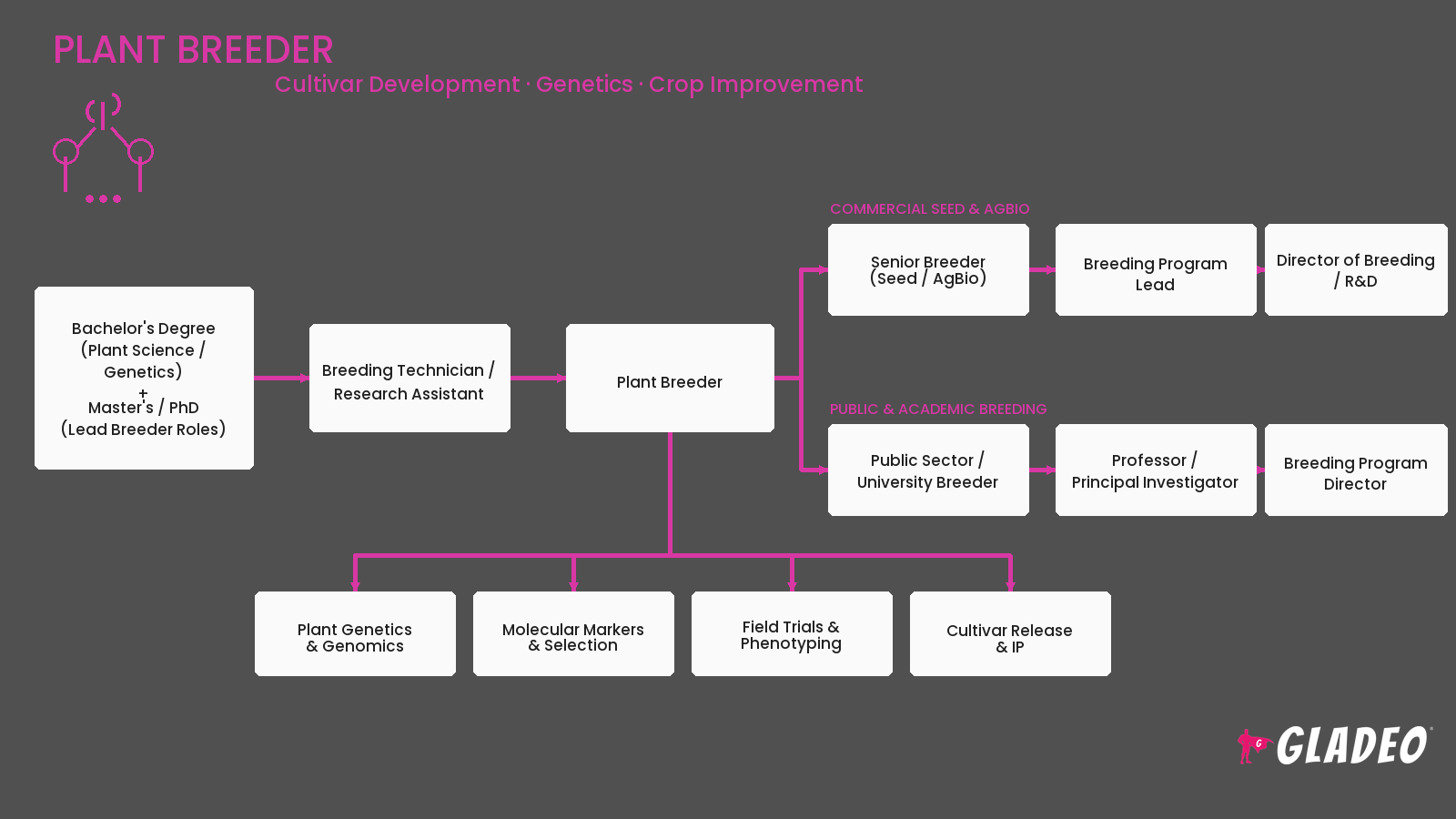
Becoming a Plant Breeder usually requires a bachelor’s degree in plant science, agriculture, biology, or a related field. Many professionals pursue advanced degrees like a master’s or PhD to specialize in genetics, breeding techniques, or biotechnology. Hands-on experience through internships or research projects is vital to build practical skills.
Students can take courses in relevant subjects such as:
- Plant Biology
- Genetics and Genomics
- Plant Physiology
- Soil Science
- Agronomy
- Plant Pathology
- Biotechnology
- Statistics and Data Analysis
- Horticulture
- Environmental Science
Alongside formal education, building a portfolio of research projects and gaining experience with breeding programs or laboratories strengthens your qualifications. Many Plant Breeders continue learning on the job and through professional development to stay current with emerging technologies and methods.
- Take biology, chemistry, and environmental science courses in high school to build a strong science foundation.
- Join agricultural clubs like FFA or 4-H to gain hands-on experience with plants and farming.
- Participate in science fairs or research competitions focused on plant science or genetics.
- Volunteer at local farms, nurseries, or botanical gardens to observe plant breeding work.
- Pursue summer internships or college programs related to agriculture or biotechnology.
- Develop computer skills including statistics and data analysis software.
- Attend college open houses to explore agriculture and plant science majors.
- Find mentors among science teachers or agricultural professionals.
- Engage in community gardening or urban farming projects.
- Explore dual enrollment or AP courses in biology and chemistry.
- Choose programs with strong plant science and genetics coursework.
- Look for opportunities to work in research labs or on breeding projects.
- Verify availability of internships or cooperative education with agricultural companies.
- Seek programs offering training in biotechnology and molecular breeding techniques.
- Consider schools with greenhouse and field trial facilities.
- Check for faculty expertise in crop improvement and plant breeding.
- Explore programs that connect students with farming communities for practical exposure.
- Prioritize institutions with access to modern breeding software and technology.
- Look for scholarships or funding focused on agricultural sciences.
- Review alumni success in plant breeding careers or research.
- Evaluate program partnerships with industry and government research centers.
- Ensure courses cover both traditional breeding and modern biotechnologies.
- Apply for internships or research assistant roles at agricultural universities or research centers.
- Volunteer at seed companies or botanical gardens to gain hands-on experience.
- Build a portfolio documenting any plant breeding or genetics projects.
- Network with professors, farmers, and industry professionals through conferences or clubs.
- Create a resume highlighting science coursework, lab skills, and any fieldwork experience.
- Seek entry-level positions such as plant technician, lab assistant, or field research assistant.
- Develop proficiency with genetic analysis software and data management tools.
- Attend workshops or webinars on current plant breeding technologies.
- Prepare for interviews by studying key concepts in plant genetics and breeding.
- Join professional organizations for networking and mentorship opportunities.
- Ask for letters of recommendation from educators or supervisors familiar with your work.
- Stay open to relocating for positions that offer growth and learning.
- Gain expertise in advanced genetic and molecular breeding techniques.
- Publish research findings in scientific journals to build reputation.
- Develop leadership skills by managing breeding projects or teams.
- Expand professional network through conferences and agricultural organizations.
- Pursue certifications or specialized training in biotechnology or data analysis.
- Collaborate internationally on crop improvement initiatives.
- Seek roles with increased responsibility such as lead breeder or research scientist.
- Stay current on industry trends to innovate and adapt breeding strategies.
Websites:
- American Society of Agronomy (agronomy.org)
- Crop Science Society of America (crops.org)
- Plant Breeding and Genomics Community (plantbreedinggenomics.org)
- The Seed Savers Exchange (seedsavers.org)
- International Plant Breeding Symposium (ipbs.org)
- Association for Applied Biotechnologists (aab.org)
- National Institute of Food and Agriculture (nifa.usda.gov)
- Society of Horticultural Science (ashs.org)
- AgCareers.com (agcareers.com)
- Agricultural Research Service (ars.usda.gov)
- Plant Breeders’ Rights Offices (varies by country)
- Biotechnology Innovation Organization (bio.org)
- Food and Agriculture Organization (fao.org)
- International Crop Research Institute for the Semi-Arid Tropics (icrisat.org)
Books:
- Plant Breeding: Principles and Methods by B.D. Singh
- Principles of Plant Genetics and Breeding by George Acquaah
- Plant Breeding Reviews edited by Jules Janick
- Genetics and Genomics of Crop Plants by Rajeev K. Varshney and Roberto Tuberosa
- The Art and Science of Plant Breeding by John W. Dudley
If plant breeding isn’t the perfect fit, many related careers use similar skills and interests in biology, agriculture, and environmental science.
- Agronomist: Focuses on soil management and crop production techniques.
- Plant Geneticist: Specializes in plant DNA research and genetic engineering.
- Horticulturist: Works with garden plants, fruits, and vegetables for cultivation and improvement.
- Soil Scientist: Studies soil properties and their effect on plant growth.
- Agricultural Extension Agent: Educates farmers about best practices and new technologies.
- Environmental Scientist: Analyzes environmental factors affecting plant and ecosystem health.
- Seed Technologist: Tests and improves seed quality and viability.
- Biotechnologist: Develops biological tools to improve agriculture and plant traits.
- Farm Manager: Oversees day-to-day operations of agricultural production.
- Crop Consultant: Advises farmers on crop selection, pest control, and soil health.
Click here to download the infographic
Newsfeed

Featured Jobs
Online Courses and Tools