






Spotlights
Plant Cytogeneticist, Plant Cell Biologist, Plant Tissue Scientist, Plant Microscopy Specialist, Botanical Cytologist, Plant Genetic Researcher, Plant Anatomy Specialist, Plant Molecular Cytologist, Plant Biotechnologist, Plant Histologist
Imagine being part of a breakthrough that helps farmers grow more resilient crops or conserves endangered plant species. Plant Cytologists make this impact possible by studying the cells of plants to unlock secrets about growth, disease resistance, and adaptation that affect ecosystems and food supplies worldwide.
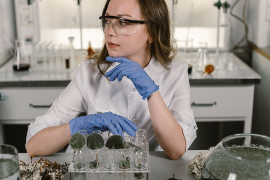
Plant Cytologists spend their days examining plant cells under powerful microscopes, preparing samples, and analyzing cellular structures to understand how plants function at the microscopic level. They collaborate closely with botanists, geneticists, agronomists, and biotechnologists to uncover insights that drive innovations in agriculture, environmental conservation, and plant breeding programs.
Using tools like electron microscopes, fluorescence imaging, and molecular markers, Plant Cytologists apply advanced laboratory techniques to observe chromosomes, cell division, and cellular responses to environmental stress. Their work is crucial for developing crops that can withstand drought, pests, and climate change, making their role essential for feeding the planet and protecting biodiversity.
- Contributing to solutions that enhance global food security and sustainable agriculture.
- Discovering new knowledge about plant life that can lead to innovative biotechnology applications.
- Collaborating with scientists across disciplines to solve complex biological problems.
- Seeing the real-world impact of research through improved crops and healthier ecosystems.
Working Schedule
Plant Cytologists typically work full-time in laboratory settings, universities, research institutions, or agricultural companies. Their schedule often involves standard daytime hours but can include extended periods during critical experiments or field sample collection. Many work as part of research teams, balancing independent lab work with collaborative meetings and data analysis sessions.
Typical Duties
- Collect and prepare plant tissue samples for cellular analysis.
- Operate advanced microscopes and imaging equipment to study plant cells.
- Analyze plant chromosomes and cell structures to identify genetic traits.
- Document and interpret cellular responses to environmental factors.
- Collaborate with plant breeders and geneticists to improve crop varieties.
- Conduct experiments to understand plant diseases at the cellular level.
- Use molecular markers to track genetic variations in plants.
- Maintain detailed laboratory records and prepare research reports.
- Assist in developing new laboratory techniques for plant cytology.
- Present findings at scientific conferences and to stakeholders.
- Stay updated on scientific literature related to plant cell biology.
- Ensure laboratory safety and compliance with research protocols.
Additional Responsibilities
- Design and propose research projects to explore plant cellular mechanisms.
- Train junior researchers and students in cytological techniques.
- Manage laboratory inventory and order specialized reagents and equipment.
- Analyze data using statistical and bioinformatics software.
- Write grant proposals to secure research funding.
- Publish research findings in scientific journals.
- Participate in interdisciplinary research initiatives.
- Engage with agricultural extension services to apply research outcomes practically.
A Plant Cytologist’s morning often starts with reviewing data from previous experiments and planning the day’s lab activities, including preparing plant samples collected from greenhouses or field sites.
Midday involves hands-on work with microscopes and imaging tools to observe cellular structures, alongside recording observations meticulously. They may also coordinate with colleagues on ongoing projects or troubleshoot experimental challenges.
In the afternoon or evening, Plant Cytologists analyze collected data, write detailed reports, and attend meetings with research teams to discuss progress and plan future studies. They might also prepare presentations or publications for scientific communities.
Soft Skills
- Attention to detail
- Critical thinking
- Strong analytical skills
- Effective communication
- Collaboration and teamwork
- Patience and persistence
- Problem-solving
- Adaptability
- •Time management
- Curiosity and eagerness to learn
- Organizational skills
- Scientific writing proficiency
Technical Skills
- Microscopy techniques (light, electron, fluorescence)
- Sample preparation and staining
- Chromosome analysis
- Molecular biology methods
- Data analysis and interpretation
- Laboratory information management systems
- Bioinformatics tools
- Statistical software
- Grant writing
- Scientific publication skills
- Research Plant Cytologist: Focuses on fundamental cellular research to understand plant biology.
- Agricultural Plant Cytologist: Applies cytological knowledge to improve crop production and resistance.
- Environmental Plant Cytologist: Studies plant cells to assess environmental impacts and conservation.
- Molecular Plant Cytologist: Combines cytology with molecular genetics to manipulate plant traits.
- Industrial Plant Cytologist: Works in biotech companies developing plant-based products.
- Academic Plant Cytologist: Teaches and conducts research in universities.
- Diagnostic Plant Cytologist: Identifies plant diseases based on cellular changes.
- Regulatory Plant Cytologist: Ensures compliance of plant materials with biological standards.
- University research departments
- Agricultural research stations
- Biotechnology companies
- Environmental conservation agencies
- Government agricultural agencies
- Pharmaceutical companies with plant-based products
- Botanical gardens and arboretums
- Seed companies
- Forestry research organizations
- Non-governmental organizations focused on sustainability
- Plant breeding corporations
- Diagnostic laboratories
Plant Cytologists often face pressure to produce accurate and reproducible results under tight deadlines, especially when research is linked to funding or agricultural cycles. Their work demands high concentration and meticulousness to avoid errors in sample preparation or data interpretation.
The job may require long hours in the lab, including repetitive tasks like slide preparation and microscope observation. Handling complex equipment and chemicals safely demands strict adherence to protocols, which can be physically and mentally taxing.
Balancing research ambitions with administrative duties such as grant writing, reporting, and training junior staff adds to daily responsibilities. Flexibility is essential, as experimental setbacks are common and require persistence to troubleshoot and adapt.
- Increasing use of high-resolution imaging and 3D microscopy to study plant cells.
- Integration of molecular genetics with cytology for precision breeding.
- Growing emphasis on sustainable agriculture impacting research directions.
- Advancements in bioinformatics for analyzing cellular data.
- Use of CRISPR and gene-editing technologies in plant cytology.
- Automation of sample preparation and imaging processes.
- Collaborative international research projects on climate-resilient crops.
- Focus on understanding plant responses to environmental stress at the cellular level.
- Development of portable microscopy tools for field research.
- Enhanced data sharing platforms for plant science communities.
Many Plant Cytologists showed early fascination with nature, often exploring plants in gardens or outdoors and asking questions about how plants grow and survive.
Hands-on activities like growing plants, using microscopes in school, and enjoying science experiments often sparked their interest in biology and the microscopic world, laying the foundation for a future in plant science.
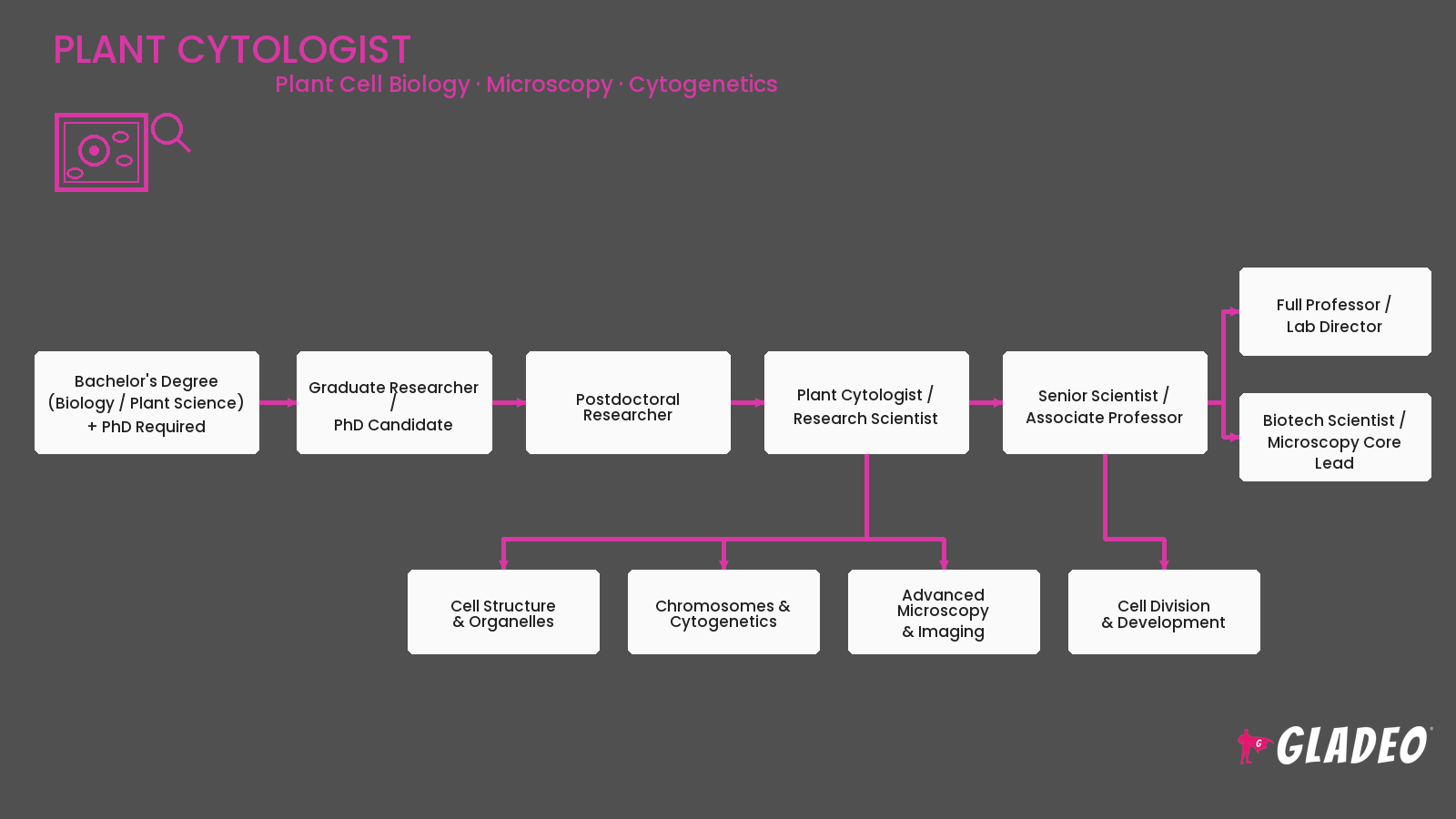
To become a Plant Cytologist, students typically pursue a bachelor’s degree in biology, botany, plant sciences, or a related field. Advanced research roles often require a master's degree or Ph.D. specializing in plant cytology, cell biology, or plant genetics. Hands-on laboratory experience and internships are crucial to building practical skills.
Students can take courses in relevant subjects such as:
- Biology (general and plant-focused)
- Cell Biology
- Genetics
- Botany and Plant Physiology
- Microbiology
- Molecular Biology
- Biochemistry
- Laboratory Techniques and Safety
- Microscopy and Imaging
- Data Analysis and Statistics
Gaining experience through internships and research assistant positions helps students develop technical expertise and build a professional network. Creating a portfolio of research projects and laboratory skills is valuable for job applications. Continuous learning through workshops and scientific journals keeps skills up to date.
- Take advanced science classes like biology, chemistry, and physics.
- Join science clubs or participate in science fairs focusing on plant or cellular biology.
- Seek internships or volunteer opportunities in laboratories or botanical gardens.
- Learn to use microscopes and basic lab equipment.
- Develop skills in data analysis and scientific writing.
- Explore computer skills including bioinformatics and statistics software.
- Attend summer programs or camps focused on plant sciences or biotechnology.
- Build relationships with science teachers and mentors for guidance and recommendations.
- Consider dual enrollment or college courses in biology or related fields.
- Stay curious and read scientific articles or books on plants and cells.
- Choose programs with strong laboratory components and research opportunities.
- Look for courses covering plant biology, cytology, and molecular genetics.
- Seek internships or cooperative education options offered by the program.
- Evaluate faculty expertise and active research in plant sciences.
- Ensure access to modern microscopy and imaging equipment.
- Consider programs that offer training in bioinformatics and data analysis.
- Check for connections to agricultural or biotech industries.
- Look for opportunities to present research at conferences.
- Prioritize programs with mentorship and career counseling.
- Review alumni success and job placement rates.
- Consider interdisciplinary programs combining plant science and technology.
- Choose schools with strong partnerships in agricultural research.
- Apply for research assistant positions in university or agricultural labs.
- Volunteer or intern in plant science or biotechnology labs.
- Build a strong portfolio showcasing laboratory and microscopy skills.
- Network with professionals through scientific societies and local events.
- Attend plant science conferences and workshops to meet experts.
- Develop a concise resume highlighting relevant coursework and experience.
- Prepare for interviews by reviewing basic plant biology and lab techniques.
- Seek mentorship from professors or industry professionals.
- Consider entry roles in seed companies or agricultural research stations.
- Stay updated on job openings via specialized job boards and industry websites.
- Practice scientific writing by contributing to newsletters or blogs.
- Be proactive in learning new lab technologies and software.
- Pursue graduate education (master’s or Ph.D.) focusing on plant cytology or genetics.
- Publish research in scientific journals and present at conferences.
- Develop expertise in emerging technologies like gene editing and imaging.
- Build interdisciplinary collaborations to broaden research impact.
- Gain leadership experience by managing lab teams or projects.
- Obtain certification or specialized training in advanced microscopy.
- Establish a professional network through industry associations.
- Seek tenure-track or senior research positions in academia or industry.
Websites:
- American Society of Plant Biologists (aspb.org)
- Botanical Society of America (botany.org)
- Crop Science Society of America (sciencesocieties.org)
- The Microscopy Society of America (microscopy.org)
- Plant Cytogenetics Society
- International Society for Plant Molecular Biology
- Society for Experimental Biology (sebiology.org)
- National Institute of Food and Agriculture (nifa.usda.gov)
- Agricultural Research Service (ars.usda.gov)
- Biotechnology Innovation Organization (bio.org)
- Plant Cell Biology Network
- Science Careers (sciencecareers.org)
- Nature Plants Journal
- Plant Physiology Journal
Books:
- Plant Cytogenetics by Ram J. Singh
- Plant Cell Biology by Stephen H. Howell
- Plant Cytology and Cytogenetics by A. K. Sharma
- Introduction to Plant Biotechnology by H. S. Chawla
- Molecular Cytogenetics of Plants by Evgeny S. Zelenin
If the specialized field of Plant Cytology doesn’t fit your path, related careers offer exciting alternatives that still connect with plants, biology, and research.
- Botanist
- Plant Geneticist
- Agronomist
- Plant Pathologist
- Environmental Scientist
- Biotechnologist
- Horticulturist
- Agricultural Technician
- Plant Molecular Biologist
- Plant Ecologist
Click here to download the infographic
Newsfeed

Featured Jobs
Online Courses and Tools